

Last Updated: October 29, 2026
Quick Summary
The best fabric for HIIT is a polyester-nylon or elastane blend with four-way stretch, flatlock seams, and open mesh panels, since polyester dries fast while nylon adds softness and stretch. Pure cotton holds sweat against your skin and is the wrong choice for high-intensity intervals.
- HIIT alternates sweat spikes and temperature swings on a 30-second loop, unlike lifting or steady cardio.
- Polyester is hydrophobic and dries fast, while nylon attracts some water and dries slightly slower.
- A mid-range denier of 50-100 balances softness and durability for HIIT knits.
- Flatlock seams and a crotch gusset reduce friction during high-rep, high-impact work.
- Wash cold, use a mesh bag, and skip the dryer to protect elastane and stretch.
Table of Contents
- Why HIIT Demands Different Fabric Than Lifting or Steady Cardio
- What to Look for in the Best Fabric for Workout Clothes
- Polyester vs. Nylon Activewear: Which Handles Sweat Better
- Cotton vs. Polyester Workout Clothes: What to Wear and What to Skip
- How to Pick Moisture-Wicking Fabric for Gym Clothes That Lasts
- Compression, Opacity, and Squat-Proof Construction
- Fabric Care, Microplastics, and Getting More Miles Out of Your Gear
- Stocking Your Gym Bag With Fabric That Works as Hard as You Do
- Frequently Asked Questions
Why HIIT Demands Different Fabric Than Lifting or Steady Cardio
High-intensity interval training punishes fabric in ways a steady run or a heavy squat session never does. The best fabric for HIIT has to survive repeated spikes in sweat output, rapid temperature swings, and constant full-range movement, all within the same 30-minute window. JACKED N TAN builds gear for people who train hard and expect it to hold up.
Here is the core difference: lifting is mostly static tension, and steady cardio is mostly sustained heat. HIIT is both, alternating on a 30-second loop.
A fabric that handles one rarely handles the other well. That is the tension most buying guides ignore.
What to Look for in the Best Fabric for Workout Clothes
The best fabric for workout clothes balances four things at once: how fast it moves sweat away from skin, how much it stretches and springs back, how well it hides what is underneath, and how long it survives abrasion. Miss any one of those and the garment fails somewhere in your training week. Below, we break down the two that matter most for HIIT.
Moisture-Wicking Properties and Breathability
Moisture-wicking fabric for gym clothes works through two mechanisms working together. Hydrophobic fibers push sweat toward the surface, where it spreads thin and evaporates fast. Hydrophilic fibers absorb and hold moisture. The best performance knits blend both so sweat leaves your skin quickly without the fabric turning into a wet sponge.
Breathability is a separate property. A knit can wick well and still trap heat if airflow is poor. Look for open mesh panels in high-sweat zones, under the arms and down the spine, and a fabric weight that feels light in the hand. Thermally regulated knits do both jobs at once.
Four-Way Stretch, Recovery, and Flatlock Seams
Four-way stretch means the fabric gives in every direction, not just two. HIIT involves lunges, burpees, and rotational jumps, so you need stretch on the diagonal too. Recovery is the part most shoppers skip: a good knit snaps back to shape instead of sagging at the knees and elbows after a few washes.
Seam construction decides whether a great fabric becomes a chafing problem. Flatlock seams lie flat against the skin and reduce friction during high-rep, high-impact work. A gusset in the crotch area matters just as much. It removes the seam where you least want one.
Polyester vs. Nylon Activewear: Which Handles Sweat Better
Polyester wins on drying speed and durability. Nylon wins on softness and stretch. For HIIT, the answer is usually a blend of the two, not a pure version of either, but the reason why comes down to how each fiber behaves at the molecular level when sweat output spikes and falls on a 30-second loop.
Polyester is hydrophobic by nature. Its polymer chain has few sites that attract water, so sweat beads on the surface and spreads thin across the knit, where airflow evaporates it quickly. That is why polyester dries faster than almost any other performance fiber. It also holds up well against abrasion and keeps its color through repeated washing. Its weakness is that cheap polyester can feel scratchy against skin.
Nylon, also sold as polyamide, is stronger and more elastic. Its polymer chain includes amide groups that attract a small amount of water, which is why nylon feels smoother and cooler against skin and takes dye more deeply. That same water affinity means nylon absorbs a little more moisture than polyester, so it dries slightly slower, a real trade-off during back-to-back intervals when you want sweat off your skin fast.
A common approach in performance knits is a polyester base with a nylon or elastane content for stretch. That combination gives you quick-dry behavior plus a soft hand and four-way stretch. Denier, the measure of fiber thickness, tells you a lot: lower denier means finer, softer yarn, while higher denier means a tougher, more abrasion-resistant fabric. For HIIT, a mid-range denier in the 50-100 range is a common compromise between softness and durability, though the right number depends on the knit structure and the garment's end use.
Neither fiber is inherently the better fabric for HIIT. The blend ratio and knit structure matter more than the fiber name on the label. A 90/10 polyester-elastane knit with an open mesh back will outperform a 50/50 blend with a tight, non-breathable structure every time.
Here is how the two main performance fibers compare for HIIT training.
| Fiber | Best for | Key difference |
|---|---|---|
| Polyester | Drying speed and durability | Hydrophobic, so sweat beads and evaporates fast |
| Nylon (polyamide) | Softness and stretch | Attracts some water, so it dries slightly slower |
| Polyester-nylon or elastane blend | Quick-dry plus soft hand and four-way stretch | Common approach in performance knits |
| Mid-range denier (50-100) | Compromise between softness and durability | Lower denier is softer, higher is tougher |
Cotton vs. Polyester Workout Clothes: What to Wear and What to Skip
Cotton is comfortable and breathes well in dry conditions. It is the wrong choice for HIIT because it holds moisture instead of releasing it, but the reason is more specific than most guides admit, and it comes down to how cotton and polyester handle the thermoregulation cycle that HIIT puts your body through.
Cotton absorbs sweat and holds it against your skin, so a cotton tee gets heavy and slower to dry during intense training.
That said, the cotton-versus-polyester question is not as binary as most guides make it. A small cotton or modal blend, think 20-30% cotton with a polyester or nylon base, can soften the hand-feel of an otherwise technical knit without turning the garment into a wet sponge. The key is that the synthetic component still dominates the moisture-management structure. Pure cotton tees are best saved for rest days, low-impact training, or casual wear.
How to Pick Moisture-Wicking Fabric for Gym Clothes That Lasts
Durability comes down to three signals: fiber content, knit density, and seam construction.
A few practical checks we would run in the store:
- Stretch it and let go. Good fabric recovers quickly. If it stays baggy, it will sag in training.
- Hold it to the light. Opacity matters, especially in lighter colors. Thin knits go see-through when stretched.
- Look at the seams. Flatlock stitching and a crotch gusset signal a garment built for movement.
- Check the care label. High heat destroys elastane. Cold wash and air dry keep stretch alive far longer.
For a deeper look at what separates gear that lasts from gear that pills and sags, this guide on what makes gym apparel durable breaks down the construction details. If you are choosing sweat-ready shirts that survive hard training, our guide on durable gym shirts for heavy training covers fit and fabric together.
Compression, Opacity, and Squat-Proof Construction
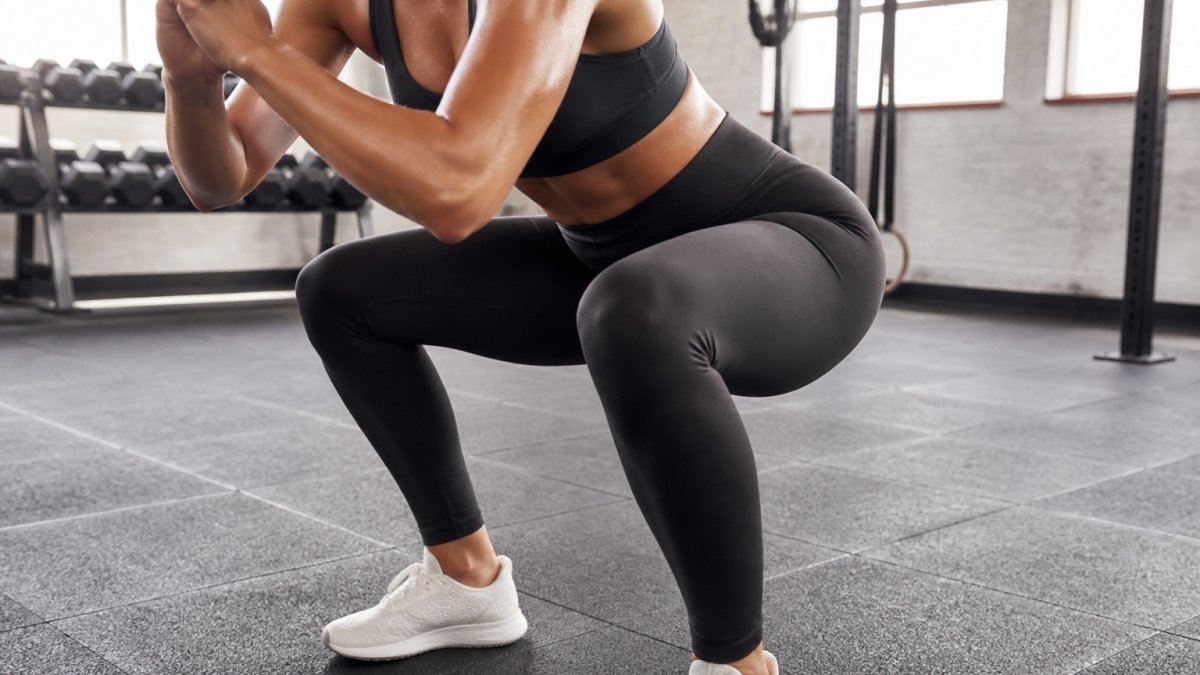
Compression and opacity are two different jobs, and HIIT needs both. Compression supports muscles through high-impact work and reduces the bounce that causes chafing. Opacity keeps the fabric from going sheer when it stretches, which is the whole point of squat-proof construction.
Lighter colors and thinner knits are the usual culprits when fabric turns transparent mid-squat. If you train in leggings or light shorts, test the fabric in a stretch position before you commit.
Fabric Care, Microplastics, and Getting More Miles Out of Your Gear
Wash cold, use a mesh laundry bag, and skip the dryer. Heat breaks down elastane and speeds up pilling, while air drying protects both stretch and surface. Wash synthetic kit separately from heavy items like towels and jeans, which abrade the fibers and loosen more microfibers. Following a proper seven-step care routine for lifting shirts keeps technical fabrics performing far longer than tossing them in a hot wash.
Stocking Your Gym Bag With Fabric That Works as Hard as You Do
That is what we build at JACKED N TAN: premium fitness-inspired apparel designed for both intense sessions and everyday wear, so your kit reflects the discipline you bring to the gym.
If you are planning a full HIIT rotation, our guide on building a complete gym wardrobe maps out the pieces, and you can visit the JACKED N TAN website for current products and prices.
Frequently Asked Questions
What is the best fabric for high-intensity interval training?
A synthetic blend of polyester or nylon with roughly 10 to 20 percent elastane or spandex works best for HIIT. The synthetic base moves sweat off your skin and dries fast, while the stretch fiber lets you hit full range on sprints, burpees, and jumps. Look for four-way stretch, flatlock seams, and a weight that stays opaque when wet. Pure cotton holds moisture and gets heavy, so keep it for warmups and casual wear.
Is polyester or nylon better for workout clothes?
Both work, but they behave differently. Polyester is hydrophobic, dries quickly, and holds color and shape well, which makes it the workhorse for tees and shorts. Nylon is stronger and more abrasion-resistant, so it suits leggings and anything that rubs against equipment. Many quality pieces blend the two. Check the label for a polyester or nylon base with spandex, then judge by weight and seam construction rather than the fiber name alone.
Is a 100% cotton t-shirt good for the gym?
For HIIT, no. Cotton is hydrophilic, so it absorbs sweat and stays wet against your skin, which adds weight and raises chafing risk during high-impact intervals. It is fine for lifting sessions where you rest between sets, or for warmups and everyday wear. If you want natural fibers, look for a cotton-synthetic blend rather than 100% cotton, and save the pure cotton tee for after the workout.
What should I look for in breathable workout clothes?
Start with the fiber: a polyester or nylon base with elastane moves moisture and stretches with you. Then check construction. Flatlock seams reduce friction, a gusset improves range of motion, and mesh panels in high-heat zones add airflow. Weight matters too, since a heavier knit feels hotter but hides more. Try the fabric in your hand, stretch it, and see if light passes through before you commit.
The gap between gear that survives a training block and gear that falls apart is fabric, seams, and care, not branding. Get those three right and your kit works as hard as you do. Shop the JACKED N TAN drop to find performance apparel built for the way you train, with comfort, confident fit, and a mindset of constant progress in every piece.
