

Table of Contents
- Why Gym Apparel Durability Matters More Than You Think
- Fabric Fundamentals: What Makes Gym Apparel Durable at the Fiber Level
- Construction That Lasts: Seams, Stitching, and Hardware
- How to Choose Durable Gym Shirts: A Practical Checklist
- Signs of High-Quality Activewear You Can Spot Before Buying
- How to Wash Gym Clothes to Prevent Wear and Tear
- Conclusion
- Frequently Asked Questions
Last Updated: September 17, 2026
Why Gym Apparel Durability Matters More Than You Think
Understanding what makes gym apparel durable is the difference between gear that lasts a few washes and gear that survives years of training. At JACKED N TAN, we built our collection around this problem.
Durability isn't about brand names or price tags. It comes down to fiber choice, fabric construction, and care.
A common mistake is assuming "athletic" on a label means durable. Many mass-market options use thin fabric and basic stitching that breaks down fast.
Fabric Fundamentals: What Makes Gym Apparel Durable at the Fiber Level
Fiber choice determines how a garment handles stress, moisture, and repeated washing, but the fiber name on the tag tells only part of the story. Two 100% polyester shirts can behave completely differently after 50 washes depending on how the yarn was spun, twisted, and tested.
Synthetic vs. Natural Fibers
Polyester and nylon dominate performance wear for their tensile strength and abrasion resistance. Polyester blends resist tearing and stretching out of shape. Nylon is even stronger in abrasion resistance, appearing in high-wear zones like waistbands and reinforcement panels.
Cotton's weakness is moisture: it absorbs several times its own weight in water, and wet fibers swell, weaken, and abrade against each other. That's why a 100% cotton tee feels great on day one and looks tired by month six.
Blends solve this. A 50/50 cotton-polyester mix, like the one used in the Unisex Hoodie, balances comfort with structural integrity: polyester adds recovery and reduces pilling, cotton keeps it soft. More polyester means more durability and faster drying; more cotton means more breathability and a softer hand-feel.

GSM, Denier, and Fabric Density Explained
GSM (grams per square meter) measures fabric weight; higher GSM generally means denser, more durable fabric. Denier measures fiber thickness in synthetic yarns: lower denier is finer and softer, higher denier adds toughness.
A mid-to-heavyweight fabric in the 200-300 GSM range handles gym use well without feeling like canvas. Anything under 150 GSM feels flimsy and wears out faster at stress points like shoulders and seams.
The Role of Yarn Twist
Yarn twist is one of the most underrated durability variables. Twist is the number of turns per inch applied as fibers are spun into yarn. Low-twist yarns are loftier and softer but shed fibers easily, causing pilling. High-twist yarns lock fibers together more tightly, producing a denser, smoother surface that resists abrasion and holds its shape.
The trade-off is hand-feel: very high twist can feel crisper at first, though it softens with wear. Ring-spun cotton is a middle path, aligning fibers with a moderate, consistent twist for a smoother, stronger yarn that resists pilling better than basic cotton.
How Fabrics Are Actually Tested for Durability
Durability claims aren't just marketing. Brands that invest in testing show it through denser fabric, tighter twist, and cleaner construction. When a garment feels substantial, snaps back, and shows no fuzz after a few washes, that's the test data in your hands.
Why This Matters More Than Fiber Name Alone
A 100% polyester shirt with low-twist yarn and loose construction can fail faster than a well-made cotton-poly blend with high-twist yarn and reinforced seams. Fiber type sets the ceiling; yarn twist, fabric density, and finishing determine whether a garment reaches it.
Construction That Lasts: Seams, Stitching, and Hardware
Construction quality separates apparel that lasts from apparel that falls apart. Fabric can be excellent and still fail at the seams, zipper, or waistband. Hardware and seams fail before the fabric itself, so this deserves as much attention as fiber choice.
Flatlock Seams and Reinforcement Points
Flatlock seams lie flat against the skin and distribute tension across the stitch rather than concentrating it at one point, reducing seam failure during pulling, stretching, or washing. In a standard serged seam, stress concentrates at individual stitch points, and once one pops, failure propagates along the seam.
Look for double-needle stitching at collars, shoulders, armholes, and hems: two parallel rows mean if one is compromised, the second still holds.
Hardware Durability: Zippers, Drawcords, and Elastic
Hardware gets overlooked until it breaks. A jammed zipper or frayed drawcord ruins an otherwise solid hoodie, often sending a garment to the donation pile while the fabric is still perfectly good.
How to Identify the End of Life for Gym Apparel
Knowing when a garment is genuinely done helps you avoid premature replacement and recognize when a piece no longer does its job.
Retire a garment when you see any of these:
- Permanent odor: If a garment smells immediately after washing, odor-causing bacteria have colonized the fibers and normal washing no longer removes them. This is a functional failure, not a cosmetic one.
- Lost stretch recovery: If a waistband or cuff stays stretched out after you release it, the elastane is degraded and the fit is gone.
- Seam failure that can't be repaired: A small popped stitch can be fixed; a blown-out seam along a stress point usually can't be restored to original strength.
- Fabric thinning at stress points: Hold the fabric up to light at the shoulders, seat, and knees. If it's noticeably thinner or translucent compared to the rest of the garment, it's close to tearing.
- Pilling that covers the surface: Light pilling is cosmetic; heavy pilling means the yarn structure is breaking down and the fabric is losing mass.
- Hardware failure: A broken zipper or a drawcord that's pulled out and can't be rethreaded often ends a garment's life even if the fabric is fine.
How to Choose Durable Gym Shirts: A Practical Checklist
Use this checklist before buying any training shirt. It covers the signals that predict how a garment will perform over time.
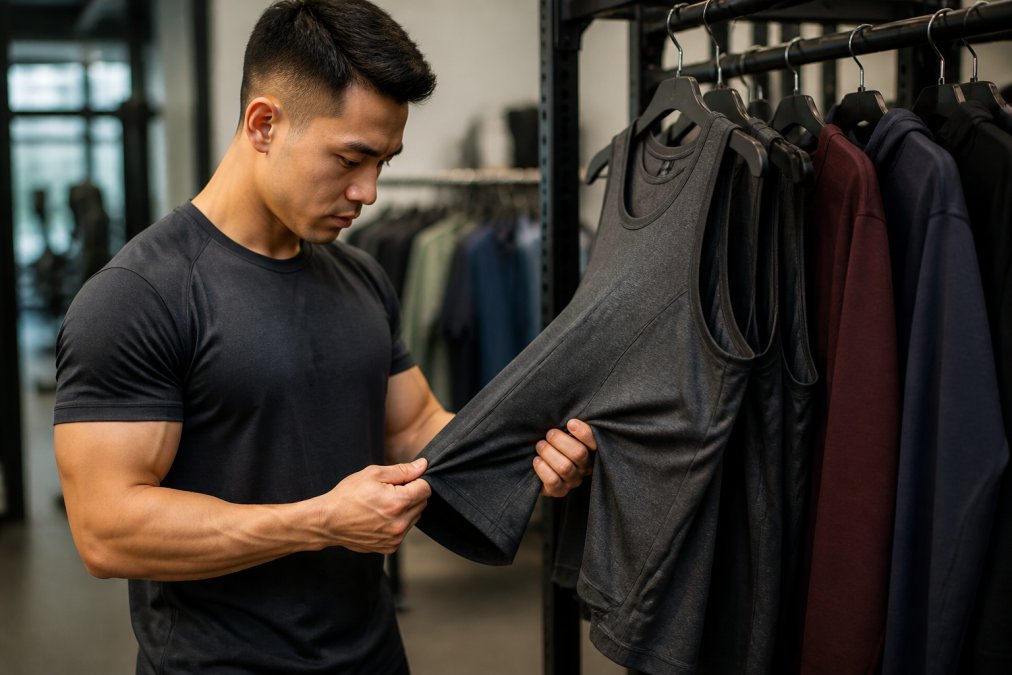
- Fabric weight: Look for mid-to-heavyweight material (200+ GSM range)
- Fiber blend: Polyester or cotton-poly blends for strength; 100% cotton for comfort if you accept faster wear
- Seam type: Flatlock or double-needle stitching at all stress points
- Reinforcement: Taped neck and shoulders, double-stitched hems
- Hardware: Metal zippers, spandex-blend elastic, reinforced drawcords
- Fit: Snug but not restrictive; excess fabric catches and tears
- Care label: Pre-shrunk fabric reduces post-wash distortion
| Signal | What to Look For | Why It Matters |
|---|---|---|
| Fabric weight | 200-300 GSM | Denser fabric resists abrasion and pilling |
| Fiber blend | Cotton-poly or performance synthetic | Balances comfort with tensile strength |
| Seam construction | Flatlock or double-needle | Distributes stress, prevents blowouts |
| Hardware | Metal zippers, spandex elastic | Survives repeated use without failing |
| Pre-treatment | Pre-shrunk, ring-spun cotton | Reduces distortion after washing |
Signs of High-Quality Activewear You Can Spot Before Buying
High-quality activewear shows physical markers anyone can identify without testing. These signs predict how the garment will hold up over months of training.
Then check the details:
- Stitching density: More stitches per inch signal stronger seams
- Color consistency: Uneven dye indicates cheaper processing
- Stretch recovery: Pull the fabric and release; quality material snaps back
- Edge finishing: Clean, folded hems beat raw or serged edges
- Label quality: Printed labels outlast scratchy woven tags that fray
How to Wash Gym Clothes to Prevent Wear and Tear
Proper washing extends the life of any garment. Heat, harsh detergents, and rough drying break down fibers faster than training itself.
Follow these steps:
- Turn garments inside out before washing to protect outer surfaces
- Use cold water on a gentle cycle; heat degrades elastane and shrinks cotton
- Skip fabric softener; it coats fibers and reduces moisture-wicking ability
- Wash with similar fabrics to reduce abrasion from zippers or heavy items
- Air dry when possible; if using a dryer, choose low heat
- Wash less often when clothes aren't heavily soiled; over-washing accelerates wear
Conclusion
Durability rarely shows itself until months of use, by which point you've already spent money on gear that didn't hold up. Learning to read fabric weight, seam construction, and fiber blends lets you decide better before you buy.
Frequently Asked Questions
What fabric is most durable for workout clothes?
Polyester and nylon blends generally outlast cotton for intense training because synthetic fibers resist abrasion and hold their shape through repeated wash cycles. Cotton feels soft but absorbs sweat, gets heavy, and breaks down faster. A cotton-poly blend like the 50/50 used in the JACKED N TAN Unisex Hoodie balances comfort with reduced pilling and better structural integrity over time.
How can you tell if gym apparel is high quality?
Check the seams first. Flatlock or double-needle stitching at stress points like shoulders, armholes, and hems signals real construction quality. Look at the fabric weight, feel for four-way stretch, and check whether the label lists fiber content and GSM. Reinforced hardware on hoodies and consistent stitching without loose threads are reliable signs of high-quality activewear that will survive heavy use.
Why do some gym shirts pill after a few washes?
Pilling happens when short fibers work loose from the yarn and tangle into small balls on the surface. Lower-quality cotton with short staple fibers and loosely twisted yarn pills fastest. Air-jet spun yarns, like those in the JACKED N TAN Unisex Hoodie, are engineered to reduce pilling. Washing inside out in cold water and skipping the dryer also slows it down.
How should you wash gym clothes to make them last longer?
Turn garments inside out, wash in cold water on a gentle cycle, and use half the normal detergent. Skip fabric softener because it coats fibers and traps odor. Air dry when possible. If you use a dryer, go low heat. Wash synthetic fabrics separately from rough items like towels or jeans to reduce abrasion resistance wear, and avoid overloading the machine.