

Table of Contents
- Why Lifting Shirts Need Their Own Wash Routine
- What You'll Need Before You Start
- Step 1: Air Out Sweaty Clothes Promptly
- Step 2: Separate Workout Clothes From Other Laundry
- Step 3: Turn Garments Inside Out and Pre-Soak When Needed
- Step 4: Choose the Best Way to Wash Activewear
- Step 5: Set Washer Temperature and Load Size Correctly
- Can You Put Gym Clothes in the Dryer?
- Troubleshooting Persistent Odor
- The Gear That Makes the Routine Easier
- Frequently Asked Questions
Last Updated: October 18, 2026
Why Lifting Shirts Need Their Own Wash Routine
Lifting shirts take a beating regular tees never see. A heavy squat session soaks sweat, body oils, and bacteria into the armpits, collar, and back, where fabric breaks down first.
Sweat itself does not smell, bacteria that feed on it do. Once that bacteria settles deep into cotton fibers, the shirt develops a permanent funk no single wash removes.
This guide from JACKED N TAN walks through seven steps, airing, sorting, pre-soaking, detergent choice, washer settings, and drying, plus the mistakes that quietly ruin gym shirts: too much detergent and too much heat.
What You'll Need Before You Start
Gather these supplies before you touch a single shirt:
- A mesh laundry bag for delicates and printed tees
- A gentle, enzyme-based detergent
- White vinegar for odor treatment
Check the care label first, it sets the maximum wash temperature and dryer eligibility. Ignore it and you risk shrinking or cracking prints. 100% ring-spun cotton handles warm water well, while synthetics need more care because heat damages stretch fibers. Sort by fabric type, not just color.
Step 1: Air Out Sweaty Clothes Promptly
Air out sweaty clothes the moment you get home. Hang each shirt on a chair back, door hook, or drying rack, spreading the fabric so air reaches the armpits and back.
Never ball up a wet shirt in a gym bag or closed-lid hamper, that traps moisture and gives bacteria hours to settle in. If you cannot wash right away, air it out, hang it loosely, and wash within a day or two.
Step 2: Separate Workout Clothes From Other Laundry
Separate workout clothes from towels, jeans, and everyday cotton, not for color, but for bacteria and lint. Gym clothes carry more bacteria and body oil, and a mixed load dilutes cleaning power and spreads odor. Heavy items like jeans also rub against thin activewear and cause pilling.
Build a separate laundry load for activewear:
- Lifting shirts and tank tops
- Shorts and leggings
- Socks and gym towels
Keep the load loose, fill the drum about three-quarters full at most. An overloaded drum cannot rinse detergent out properly, and residue holds odor.
Step 3: Turn Garments Inside Out and Pre-Soak When Needed
Turn every shirt inside out before washing. The inside is where sweat, skin cells, and bacteria collect, so flipping the garment puts that dirty side against the water and agitation.
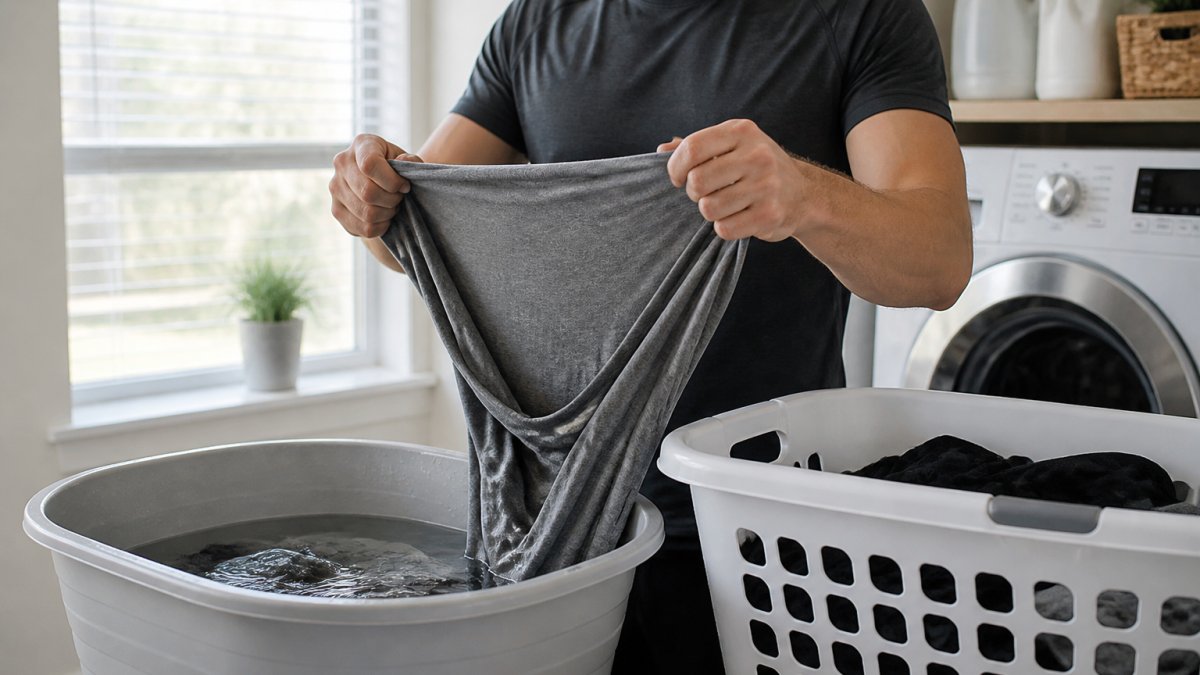
Pre-soak when a shirt has a set-in smell or visible sweat stains.
Step 4: Choose the Best Way to Wash Activewear
The best way to wash activewear is a gentle cycle in cold or warm water with a small amount of enzyme-based detergent. Skip fabric softener entirely.
Picking a Detergent That Removes Sweat and Odor
Choose a detergent built for odor removal. Enzyme-based formulas break down the proteins and oils in sweat, which regular detergent leaves behind.
Look for these features:
- Enzyme formula labeled for sports or activewear
- Free of dyes and heavy perfume
- Liquid rather than powder for cold-water washing
Avoid fabric softener and dryer sheets on gym clothes. Softener coats fibers with a waxy film that traps odor and blocks moisture-wicking performance, a common reason shirts keep smelling after washing.
Avoid Using Too Much Detergent
Use less detergent than the bottle suggests, not more. Excess detergent leaves residue that attracts bacteria and holds smell.
- Small load: about two tablespoons of liquid detergent
- Full load: follow the label for a normal soil level, not a heavy one
If shirts come out stiff or scratchy, that signals detergent residue. Run an extra rinse and cut back the dose next time.
Step 5: Set Washer Temperature and Load Size Correctly
Most washing mistakes on lifting shirts happen at the dial, not the detergent cup. Temperature, cycle, spin speed, and load size interact, getting them right is the difference between a shirt that lasts two years and one that pills, shrinks, or loses its stretch in two months.
Match Water Temperature to Fabric, Not to Habit
The care label sets the ceiling. Within that ceiling, use this logic:
- 100% ring-spun cotton lifting shirts: warm water (around 90-105°F) lifts body oils and sweat residue better than cold. Cotton fibers tolerate warmth well, and warm water helps detergent dissolve fully. Reserve hot water (above 120°F) for nothing in a lifting-shirt load, it accelerates shrinkage and fade.
- Cotton-poly blends: warm water is acceptable, but cold is safer for prints and dark dyes. Polyester holds odor-causing oils more stubbornly than cotton, so the detergent choice matters more than the temperature here.
- 100% polyester and performance synthetics: cold water only. Heat relaxes the elastic fibers that give the shirt its stretch and moisture-wicking structure. Once those fibers relax, the shirt does not recover.
Many people who lift regularly wash everything on warm because it feels more sanitary. For synthetics, that habit is the slow killer, cold water plus enzyme detergent cleans just as effectively without stressing the fibers.
Choose the Cycle by Fabric Weight and Print
- Gentle or delicate cycle: default for synthetics, compression shirts, and anything with a printed graphic or heat-transfer logo. Lower agitation means less friction against the print and fewer pulled threads.
- Normal cycle: acceptable for plain 100% cotton tees with no print. Cotton tolerates agitation well.
- Extra rinse: add it to any load that held heavy sweat or that came out stiff. Residue is the leading cause of shirts that smell clean out of the dryer and funky an hour into a session.
Size the Load to the Drum, Not to the Basket
- Fill the drum about three-quarters full at most. Clothes need room to tumble and for water and detergent to circulate; an overloaded drum cannot rinse residue out, and residue holds odor.
- Do not underload either, a near-empty drum lets garments tangle and rub together, increasing pilling on thin fabrics.
- Weigh the load by fabric, not just count. One heavyweight cotton hoodie plus a few tees can fill a drum as much as six lightweight tank tops.
A Practical Default Setting
For a mixed lifting-shirt load: cold water, gentle cycle, medium spin, extra rinse, three-quarters-full drum, shirts inside out and printed pieces in a mesh bag. Adjust temperature upward only for plain cotton, and only within the care label's limit.
Can You Put Gym Clothes in the Dryer?
Sometimes, on low heat, and only for some fabrics. The dryer is the highest-risk step in a lifting-shirt routine because heat damage is cumulative and irreversible. A shirt can survive one hot cycle and still be compromised; by the fifth, the stretch is gone and the print is cracking.
What Heat Actually Does to Each Fabric
- 100% cotton: shrinks progressively with heat. A cotton tee dried on high can lose a full size over several cycles, and the collar and cuffs go first. Low heat or air-dry is the safe zone.
- Cotton-poly blends: moderate risk. The cotton portion shrinks while the poly portion does not, causing puckering at seams and a slightly twisted fit over time.
- 100% polyester and performance synthetics: high risk. The elastic fibers that provide stretch and the structure that wicks moisture relax under heat. The shirt may still fit, but it stops wicking and starts holding odor.
When Low-Heat Tumble Drying Is Acceptable
Low heat is a reasonable choice when:
- The care label explicitly permits tumble dry low.
- The shirt is plain 100% cotton with no print.
- You remove it while still slightly damp and hang it to finish. This shortens heat exposure and prevents overdrying.
Low heat is not a safe default for synthetics, compression fits, or printed shirts. For those, air-dry.
How to Air-Dry Lifting Shirts Properly
- Hang shirts inside out on a rack or line with space between garments so air moves through.
- Hang synthetics and compression shirts by the hem or lay them flat; hanging a heavy wet cotton tee by the shoulders can stretch the neckline.
- Keep the room ventilated, a closed, humid bathroom slows drying and lets bacteria regrow.
Between-Session Storage and Wash Frequency
Wash a lifting shirt after every training session. One wear is the limit for a shirt that absorbed heavy sweat. If you train twice in a day, use two shirts.
If you cannot wash right away:
- Air the shirt out first, then hang it loosely, do not ball it up or seal it in a bag.
- Keep sweaty shirts out of a closed hamper; a breathable basket or an open hook beats a lidded bin.
- Wash within a day or two. The longer bacteria sit in the fibers, the more a pre-soak becomes mandatory rather than optional.
Buy enough shirts to cover a full training week so you are never tempted to re-wear a sweaty one. That single habit prevents most persistent-odor problems before they start.
Troubleshooting Persistent Odor
Persistent odor means bacteria have built up in the fabric faster than your routine removes them. The fix is a reset, not more detergent.
Work through this checklist:
- Pre-soak the shirt in cool water and half a cup of vinegar for one hour
- Wash on a gentle cycle with enzyme detergent and an extra rinse
- Skip fabric softener completely
If odor survives two full cycles, the shirt may have permanent bacterial buildup, retire it, since a shirt that will not come clean just spreads odor to the rest of the load. The long-term fix is prevention: air out sweaty clothes promptly, wash after every session, and keep detergent doses low.
The Gear That Makes the Routine Easier
A good wash routine protects your gear, but it starts with shirts worth protecting. At JACKED N TAN, we build lifting apparel for people who train hard and expect their clothes to keep up.
Our Short-Sleeve Unisex T-Shirt is made of 100% ring-spun cotton with double stitching at the neck and sleeves. For cooler sessions or layering, the Unisex Hoodie uses a cotton-poly blend with a double-lined hood and rib-knit cuffs, priced at $44.50.


Both follow the same care rules in this guide: turn them inside out, wash cold or warm, skip the softener, and air-dry when you can. Treat them right and they stay in rotation for years.
Frequently Asked Questions
Is it better to wash activewear in cold or hot water?
Cold water is the safer default for lifting shirts, especially synthetic performance fabrics and cotton blends. Cold water protects stretch, dye, and moisture-wicking finishes while still lifting sweat and bacteria when paired with the right detergent. Warm water can help with heavy odor or stains, but only if the care label allows it. Hot water speeds up fabric breakdown and shrinkage, so reserve it for white cotton only when the label approves. Always check the care label first, then choose the coolest temperature that gets the job done.
Should I soak my gym clothes in vinegar?
A vinegar pre-soak helps with stubborn odor and mineral buildup in sweaty clothes. Mix about one cup of white vinegar with cold water and soak lifting shirts for 30 minutes before the regular wash cycle. Vinegar is gentle on cotton and most synthetics and does not leave a lasting smell once dried. Skip it on garments with printed graphics if the care label warns against acids, and never mix vinegar with bleach. For routine washes, a normal detergent cycle is enough; save the vinegar soak for odor that keeps coming back.
Can you put lifting shirts in the dryer?
You can, but low heat or air-dry is the safer choice. High heat damages stretch fibers, shrinks cotton, and can bake odor into synthetic fabrics. If you use a dryer, choose the lowest heat setting, remove shirts while slightly damp, and hang them to finish. Air-drying preserves fit and print quality longer, which matters for lifting shirts you want to keep looking sharp. For JACKED N TAN tees like the $18.88 Short-Sleeve Unisex T-Shirt, air-drying helps the 100% ring-spun cotton hold its shape.
How often should you wash a lifting shirt?
Wash after every heavy training session. Sweat and skin cells feed bacteria that break down fabric and cause lingering smell, even if the shirt looks clean. If you wore a shirt only for a light warm-up and it stayed mostly dry, airing it out and re-wearing once is fine. Between sessions, hang lifting shirts to dry instead of balling them in a gym bag. Rotating three to five shirts per week keeps odor down and reduces wear from over-washing, so each shirt lasts longer.
Your shirts work as hard as you do, and they deserve a wash routine that keeps them clean, comfortable, and ready for the next session. JACKED N TAN builds premium lifting apparel with ring-spun cotton construction, durable double stitching, and fits made for training and everyday wear. Shop the drop and gear up with shirts built to survive both the gym and the laundry cycle. SHOP THE DROP.