

Table of Contents
- Why a Lifting Hoodie Is Different From a Regular Hoodie
- The 5-Step Framework for Choosing Lifting Hoodies
- Lifting Hoodie Fit: Oversized, Relaxed, Slim, or Compressive
- Workout Hoodie Fabric: Weight, Blend, and What Lasts
- Hood and Pocket Design During Heavy Lifts
- The Best Hoodies for Lifting Hold Up to Sweat and Reps
- How to Wash Gym Hoodies Without Shrinking or Pilling
- Conclusion: Buy Once, Train Harder
- Frequently Asked Questions
Last Updated: October 5, 2026
Why a Lifting Hoodie Is Different From a Regular Hoodie
A lifting hoodie is cut for movement under load, not sitting still. Regular hoodies prioritize looks and warmth; a gym hoodie has to survive overhead presses, deep squats, and full sessions without riding up, binding, or falling apart.
Most people learn this the hard way: they grab a standard hoodie, hit the rack, and within ten minutes the hem is around their ribs and the sleeves fight every rep.
At JACKED N TAN, we build hoodies for people who train hard.
The difference that matters most is coverage. When you press overhead, your arms go up and your torso stretches.
The 5-Step Framework for Choosing Lifting Hoodies
Choosing lifting hoodies comes down to five steps: measure your body, match fit to your training style, test movement before you commit, check the fabric, and inspect the hood and pocket design. Run them in order and you avoid the two most common mistakes: buying for looks and guessing your size.
Most guides skip straight to style. That is backwards. Fit and fabric decide whether a hoodie works in the gym. Style is what you pick once the function is right.
Here is the framework in full:
| Step | What You Do | Time Needed | Why It Matters |
|---|---|---|---|
| 1. Measure | Take chest, shoulder, and torso length | 5 minutes | Stops you guessing between sizes |
| 2. Match fit | Pick fit for your training style | 2 minutes | Prevents binding and hem ride-up |
| 3. Test movement | Mimic presses and squats before buying | 3 minutes | Reveals real freedom of movement |
| 4. Check fabric | Weigh blend against your sweat level | 5 minutes | Decides breathability and durability |
| 5. Inspect design | Review hood and pocket build | 2 minutes | Affects comfort during heavy lifts |
The order matters: measuring first anchors every later decision to real numbers rather than a guess.
Step 1: Measure Your Body, Not Your Old Hoodie
Measure around the fullest part of your chest, then from the base of your neck to your hip bone for torso length. Write both numbers down and compare them to the size chart, using garment measurements, not body measurements.
This is where most people go wrong. They buy the size they always buy, assuming it will fit the same across brands. It rarely does. A relaxed fit in one brand can run like an oversized fit in another.
Our Unisex Hoodie, for example, lists length and width per size directly on the product page, from a 27-inch length and 20-inch width at size S up to a 34-inch length and 34-inch width at 5XL. Those are garment measurements.

A few practical rules:
- If your chest measurement falls between two sizes, size up for lifting.
- If you have broad shoulders, prioritize width over length.
- If you are tall, check torso length first; a hoodie that is too short will ride up on every press.
Step 2: Match Fit to Your Training Style
Your training style should decide your fit. Powerlifters and bodybuilders doing heavy compound work usually want a relaxed or oversized fit that will not restrict the shoulders; those doing conditioning or circuits often prefer a slimmer cut that stays close to the body.
Think about what you do most weeks. If your program is built around squats, bench, and deadlifts, you need room through the chest and shoulders. If you train in circuits, a slimmer hoodie reduces distraction.
There is no single right answer here. There is only the fit that matches your training.
Step 3: Test Movement Before You Commit
Before you buy, test the movement the hoodie has to survive. In person, reach both arms overhead, then squat and stand back up. Buying online, do the same test the moment it arrives, before removing any tags.
Watch for three things:
- Does the hem stay near your waist when your arms go up?
- Do the shoulders pull tight when you reach overhead?
- Does the fabric bunch or bind when you squat?
If any of those fail, the hoodie is the wrong cut for lifting, no matter how good it looks.
Lifting Hoodie Fit: Oversized, Relaxed, Slim, or Compressive
Lifting hoodie fit comes in four categories: oversized, relaxed, slim, and compressive.
Here is how they compare:
| Fit | Room Through Chest | Best For | Watch Out For |
|---|---|---|---|
| Oversized | Maximum | Layering, gym-to-street style | Hem ride-up if too long |
| Relaxed | Generous | Heavy lifts, broad shoulders | Can look baggy if oversized |
| Slim | Close | Circuits, conditioning work | Binding at the shoulders |
| Compressive | Tight | Base layer under a hoodie | Restricted arm movement |
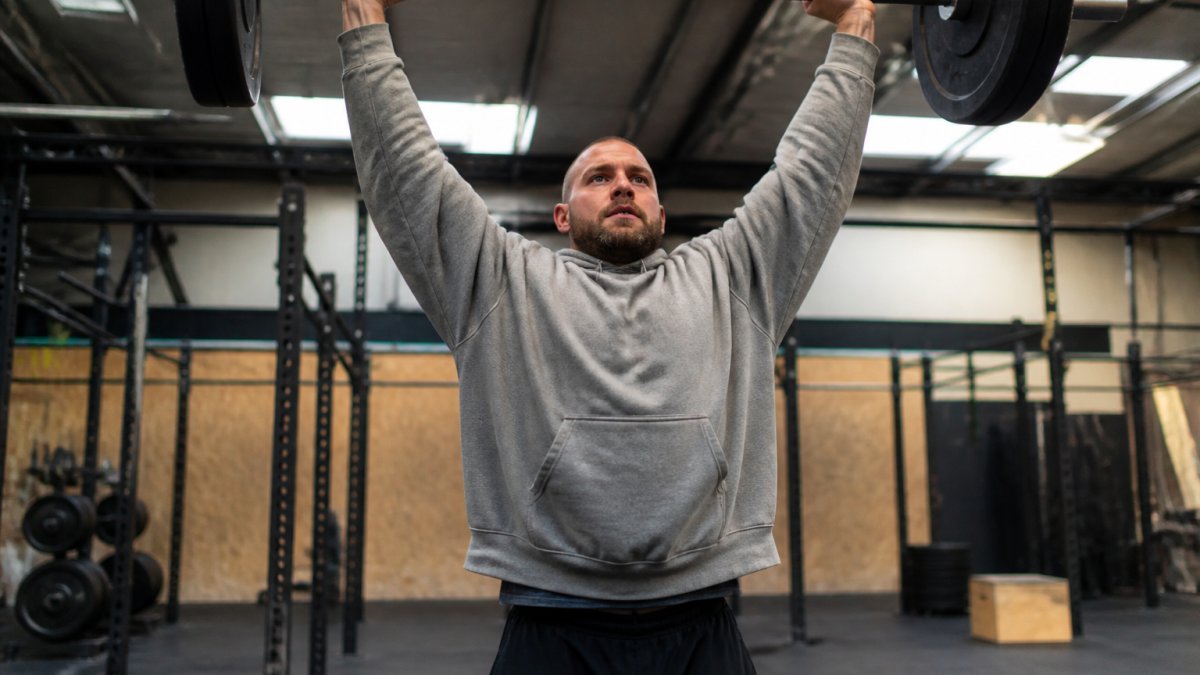
Oversized fit gives maximum room and works well for layering or outside the gym, but the hem can hang low and ride up when you move.
Slim fit suits people who train in circuits and want less fabric moving around. Compressive fit is a base layer, not a standalone hoodie, and restricts your arms if you press in it.
Workout Hoodie Fabric: Weight, Blend, and What Lasts
Workout hoodie fabric decides how the garment feels, breathes, and holds up. Check the blend and the weight: cotton gives softness and warmth, while polyester adds durability and helps move moisture away from your skin.
A common blend is 50% cotton and 50% polyester, which balances soft comfort with durability. Our Unisex Hoodie uses exactly that blend, with air-jet spun yarn for a soft feel and reduced pilling. Pilling is what makes a hoodie look worn out after a few months of washing.
What to look for in the fabric:
- Cotton for softness. It feels good against the skin and holds warmth.
- Polyester for durability. It resists stretching and helps with sweat management.
- French terry for breathability. A common choice for gym wear because it breathes well.
- Nylon for stretch. Often added in small amounts to help freedom of movement.
Weight changes the trade-off too. Heavier fabric feels warmer and more substantial but traps heat during a hard session; lighter fabric breathes better but may not hold its shape as long.
Hood and Pocket Design During Heavy Lifts
Hood and pocket design affects how a hoodie behaves during heavy lifts more than most people expect. A bulky hood can bunch behind your neck on a bench, and a loose pocket can catch on the bar or your belt.
Start with the hood. A double-lined hood with a matching drawcord holds its shape and stays put. A thin, floppy hood slides around and gets in the way during bench work or overhead pressing.
Pockets matter just as much.
Check these details before you buy:
- Is the hood double-lined? It holds shape better.
- Does the drawcord stay put or slip loose?
- Does the front pocket lie flat when you move?
- Are the cuffs and waistband ribbed with spandex? They keep the hoodie in place.
The cuffs and hem are the quiet heroes. Rib-knit cuffs and a waistband with spandex keep the hoodie anchored, so it does not ride up mid-set.
The Best Hoodies for Lifting Hold Up to Sweat and Reps
The best hoodies for lifting share a few traits: a blend that resists pilling, a cut that stays in place during overhead work, and stitching that survives repeated washing. Durability is the whole point.
Look at the construction. Double-needle stitching at the collar, shoulders, armholes, cuffs, and hem reinforces the seams that take the most stress under load.
Durability also comes down to care.
We built our hoodies around this idea: premium fitness-inspired apparel that works in the gym and on the street, made to keep its shape through sweat and reps.
How to Wash Gym Hoodies Without Shrinking or Pilling
Washing gym hoodies correctly keeps them from shrinking and pilling. The two rules that matter most: wash cold and dry low. Heat causes cotton to shrink and fabric to pill, so keep temperatures down and your hoodie holds its size and feel.
Here is a simple care routine:
- Wash cold. Cold water protects the fibers and reduces shrinkage.
- Turn it inside out. This protects the outer surface from friction that causes pilling.
- Use a gentle cycle. Less agitation means less wear on the seams.
- Skip the fabric softener. It coats the fibers and reduces breathability.
- Dry low or air dry. High heat is the fastest way to shrink a cotton blend.
- Wash with similar colors. It prevents dye transfer and keeps colors sharp.
How often should you wash a gym hoodie? Every two or three wears if you sweat heavily, less often if you wear it mostly outside the gym. Overwashing wears down any fabric faster than it needs to.
A note on the white variant: due to the fabric properties, white hoodies may appear off-white rather than bright white. That is normal for this blend, not a defect. Wash whites separately to keep them looking their best.
Conclusion: Buy Once, Train Harder
The wrong hoodie shows up mid-set, riding up, binding at the shoulders, and pulling focus off the lift. The right one disappears, so you stop thinking about gear and start thinking about the next rep.
That is what we build at JACKED N TAN: hoodies pairing a 50/50 cotton-polyester blend with air-jet spun yarn for reduced pilling, double-lined hoods, and rib-knit cuffs and waistband with spandex that keep everything in place. Measure your body, match the fit to your training, test the movement, and check the fabric, and you will buy once instead of replacing cheap gear every few months.
Shop the drop and train in gear built to keep up.
Frequently Asked Questions
What are the best hoodies for lifting?
The best lifting hoodies balance four things: a fit that lets you press overhead without the hem riding up, a fabric blend that wicks sweat instead of holding it, reinforced stitching at the shoulders and cuffs, and a hood that stays put during heavy sets. Cotton-polyester blends around 50/50 work well for most lifters because they hold shape and resist pilling. Check the size chart before ordering and confirm the return policy in case the shoulders or chest fit is off.
Should a lifting hoodie be baggy or fitted?
It depends on your training. A relaxed or oversized fit gives you room through the shoulders and chest for overhead presses and pull-ups, and it works well for warm-up layers. A slim or compressive fit keeps fabric close so it does not catch on bars or machines, which suits accessory work and gym-to-street wear. The one fit to avoid is a hoodie that is tight in the chest but long in the torso, since that combination restricts arm movement and bunches at the waist.
What fabric is best for a workout hoodie?
Look for a cotton-polyester blend, often around 50/50, because the cotton adds softness and the polyester helps the fabric keep its shape and dry faster. Air-jet spun yarn is worth seeking out since it reduces pilling after repeated washes. Pure cotton feels great at first but soaks up sweat and can stretch out. Pure synthetic dries fast but can cling. French terry is a solid middle option for cooler gyms and layering.
How should I wash gym hoodies so they last?
Turn the hoodie inside out, wash in cold water on a gentle cycle, and skip fabric softener since it coats the fibers and reduces breathability. Tumble dry on low or hang dry to limit shrinkage, especially on cotton-heavy blends. Wash with similar colors and avoid overloading the machine, which stresses seams. Following these steps keeps the double-needle stitching, rib-knit cuffs, and waistband spandex intact through months of training.
FTC guidance on textile labeling and care
OSHA guidance on workplace heat and protective clothing