

Table of Contents
- Quick Comparison: Best Gym Shirts for Bodybuilding
- How to Choose Gym Clothes for Muscle Growth
- Best Tank Tops for Gym Training
- Moisture-Wicking Workout Shirts for Intense Sessions
- Durability and Seam Construction for Heavy Lifting
- Common Mistakes When Buying Bodybuilding Shirts
- Frequently Asked Questions
Last Updated: September 13, 2026
Quick Comparison: Best Gym Shirts for Bodybuilding
Finding the best gym shirts for bodybuilding comes down to four things: moisture-wicking fabric, a cut that clears your shoulders and lats, seams that survive heavy pulling, and a fit that flatters a trained physique. This JACKED N TAN guide breaks down fabric blends, fit types, and construction details.
Most lifters buy on looks and regret it by week six: the neckline stretches, the armpit seam tears, or the fabric holds sweat like a sponge. The four picks below solve those problems depending on how you train.
| Shirt | Fabric | Fit | Price | Best For |
|---|---|---|---|---|
| Men's Premium Tank Top | 100% ring-spun cotton | Relaxed, drop arm | $32.58 | Heavy lifting, arm visibility |
| Short-Sleeve Unisex T-Shirt | 100% ring-spun cotton | Fitted | $18.88 | Everyday training staple |
| Men's Long Sleeve Shirt | 100% pre-shrunk cotton | Classic | $29.58 | Warmups, post-training wear |
| Unisex Hoodie | 50% cotton, 50% polyester | Relaxed | $44.50 | Warmups, cold gyms |
How to Choose Gym Clothes for Muscle Growth
Choosing gym clothes for muscle growth means prioritizing fabrics that move with your body and fits that show your physique without restricting it. The right shirt supports full range of motion on pressing and pulling while managing sweat.

Fit Types: Oversized vs. Compression vs. Fitted
Fit drives both comfort and how your training reads visually. Oversized cuts give airflow but bunch under a barbell. Compression shirts sit tight against the skin, used for thermal regulation and muscle awareness. Fitted and muscle-fit cuts land in between: tapered through the waist, roomy through the chest and shoulders.
For most bodybuilders, a fitted or relaxed cut works best for compound lifts, while compression suits cardio or base layers. Too-tight compression restricts breathing on squats; an oversized tee slides around during overhead work.
Fabric Blends: Polyester, Spandex, and Cotton
Fabric decides how a shirt handles sweat, stretch, and wear. Polyester-spandex blends deliver four-way stretch, quick-dry performance, and moisture-wicking (textiles.ncsu.edu). Cotton breathes well but absorbs sweat and dries slowly, so 100% ring-spun cotton suits moderate sessions and casual wear rather than the sweatiest training blocks.
Don't assume "performance apparel" always means synthetic. Ring-spun cotton has a tighter, smoother knit than standard cotton, making it softer and more durable for lifters who want a natural feel. For odor control, synthetics with anti-odor finishes win, since cotton holds sweat and smell longer.
Best Tank Tops for Gym Training
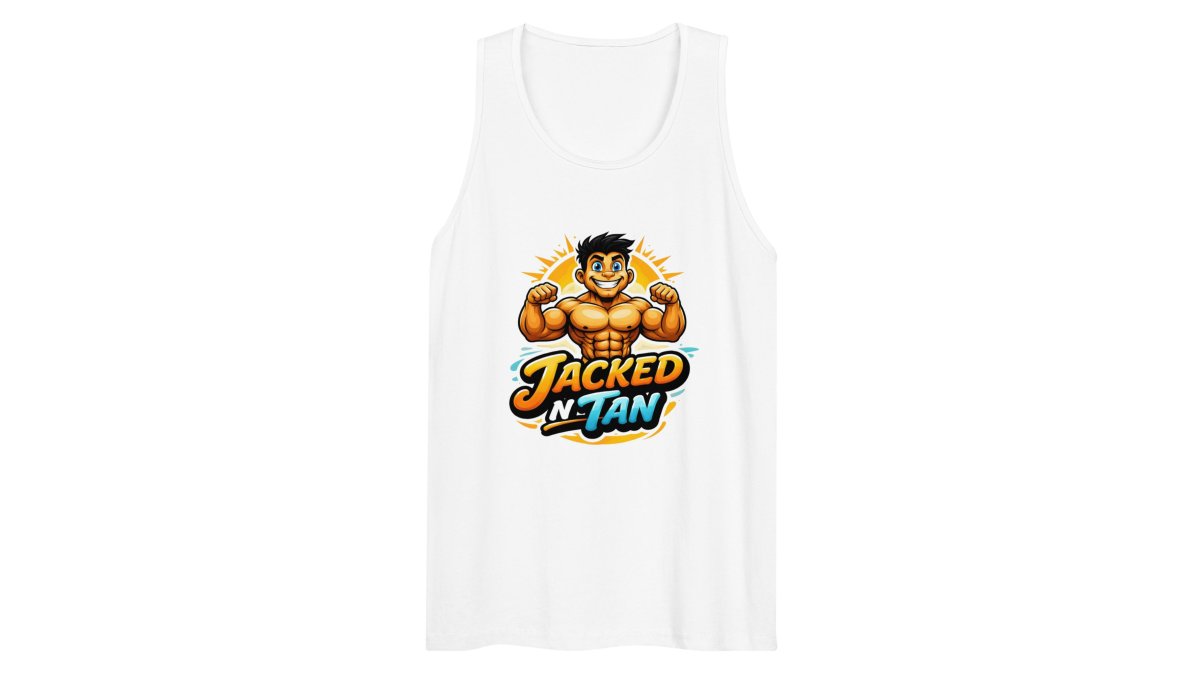
The best tank tops for gym are sleeveless, breathable, and cut to clear the shoulders so your arms and lats stay visible. The JACKED N TAN Men's Premium Tank Top is the top pick: 100% combed ring-spun cotton, relaxed fit, and a sleeveless drop arm that opens the shoulder line.
The mid-to-heavyweight, tight-knit fabric feels substantial without trapping heat, and the soft-washed surface cuts chafing. The drop arm matters for bodybuilders: standard straps dig into the trapezius during pressing and pulling, while a wider armhole lets the shoulder move freely.
The trade-off is sweat management: cotton absorbs moisture rather than wicking it, so long high-volume sessions leave you damp. For heavy leg days or conditioning circuits, a synthetic moisture-wicking tank beats it; for hypertrophy work and everyday wear, breathability and comfort win.
Moisture-Wicking Workout Shirts for Intense Sessions
Moisture-wicking workout shirts move sweat off your skin and spread it across the fabric surface so it evaporates faster. That matters most during high-intensity training, when a soaked cotton shirt clings, chafes, and drops your body temperature once you stop.
Most guides treat wicking as the only metric. In practice, sweat management is a system: quick-dry fabric, ventilation where you heat up most, and flatlock stitching so seams don't rub raw. A shirt can wick perfectly and still chafe if the seams are crude.
How Wicking Actually Works
Two mechanisms do the work. Capillary action pulls liquid sweat along the fibers from skin to outer surface, driven by fiber shape and knit tightness. Hydrophilic vs. hydrophobic finishes decide what happens next: a hydrophobic inner face pushes sweat off skin, while a hydrophilic outer face spreads it thin for evaporation. Polyester is naturally hydrophobic, which is why it dominates performance tees; cotton is hydrophilic throughout, holding moisture against you.
This is why a 100% cotton tee feels great for the first 20 minutes and miserable by minute 45. It absorbs, but it doesn't transport.
Fabric Weight: The GSM Number Nobody Talks About
GSM (grams per square meter) tells you how heavy and dense a knit is, predicting durability and heat retention better than the fiber name on the label. Rough ranges:
- Lightweight (roughly 120-150 GSM): thin, fast-drying, best for hot gyms and high-sweat conditioning work. Less durable, more prone to cling when saturated.
- Midweight (roughly 150-200 GSM): the sweet spot for most training. Enough substance to hold shape, still breathes.
- Heavyweight (roughly 200-260+ GSM): structured, opaque, holds its cut through heavy pulling. Runs warmer and takes longer to dry.
A heavyweight cotton tee and a lightweight polyester tee can both be "good gym shirts", they solve different problems. In a hot, poorly ventilated gym, a 130 GSM poly blend beats a 220 GSM cotton tee. In a cold warehouse gym where you want a shirt to survive a year of rack pulls, the heavier knit wins.
Matching the Shirt to Your Sweat Rate and Session
- Heavy sweater, high-volume session: lightweight poly/spandex blend with mesh back and underarm panels, flatlock seams, anti-odor finish. Expect it to feel damp but not heavy.
- Moderate sweater, hypertrophy work: midweight poly-cotton or ring-spun cotton. Comfortable, breathable, holds shape.
- Light sweater, short sessions: ring-spun cotton is fine and feels better against skin.
For intense sessions, look for these features:
- Synthetic blend with polyester and spandex for four-way stretch
- Quick-dry finish that keeps the fabric light when saturated
- Mesh or vented panels across the back and underarms
- Flatlock stitching on shoulder and side seams to prevent chafing
- Anti-odor treatment for back-to-back training days
The Skin-Sensitivity Angle Most Guides Skip
If you chafe easily, the fabric finish matters as much as the fiber. Smooth, tight-knit ring-spun cotton and flatlock seams reduce friction compared to open-weave synthetic mesh, which feels abrasive when saturated. For lifters prone to irritation, a soft-washed cotton or brushed poly blend often beats a raw performance knit, even if it wicks slightly less. Chafing isn't a wicking failure; it's a surface-texture problem.
In a hot gym or if you sweat heavily, a synthetic moisture-wicking tee is the practical choice. For shorter sessions where you value feel over maximum wicking, ring-spun cotton remains solid.
Durability and Seam Construction for Heavy Lifting
Durability for heavy lifting comes down to seam construction and fabric recovery, not brand claims. A shirt fails when the neckline stretches, the armpit seam splits, or the fabric loses shape after a few washes. Double-needle stitching, taped neck and shoulders, and reinforced hems hold it together under load.
Stitch Types: What Actually Fails First
Not all stitching is equal, and the failure point is predictable:
- Single-needle stitching: one row of thread. Cheapest, weakest, and the first to pop under tension. Common on budget tees.
- Double-needle stitching: two parallel rows. Roughly doubles the seam's tensile strength and is the baseline for anything marketed as gym-worthy.
- Flatlock stitching: interlocked threads that lie flat against the fabric. No raised ridge to rub skin, which is why it shows up on the seams of performance shirts, it's both stronger and chafe-resistant.
- Overlock (serged) seams: the standard on side seams and hems. Fine on its own, but if it's the only construction on a shoulder seam, expect it to give.
The shoulder and neckline take the most abuse because every pull-up, row, and overhead press loads them. A shirt with double-needle shoulders and a taped neck outlasts a single-stitch tee by a wide margin, regardless of fiber.
Fabric Recovery: The Hidden Durability Metric
Recovery is a fabric's ability to snap back after being stretched. Spandex (elastane) provides recovery in blends; cotton and polyester alone stretch and stay stretched. That's why a 100% cotton tee sags at the neck while a 90/10 poly-spandex blend holds its cut. Look for 5-15% spandex, enough to recover, not so much it feels like compression gear.
Heavier knits (higher GSM) also resist deformation better, because more fiber mass distributes the load. A 200+ GSM cotton tee holds its shape longer than a 140 GSM one, even with identical stitching.
Construction Details That Matter
- Taped neck and shoulders: a strip of fabric runs across the shoulder seams and around the collar, preventing stretch and warp.
- Quarter-turned body: the fabric is cut and rotated so the center crease doesn't run down the front, eliminates the twisted-seam look after washing.
- Rib-knit collar: a thicker, elastic collar that resists the "bacon neck" sag common on cheap tees.
- Reinforced hems: double-stitched bottom hems that survive repeated tucking and pulling.
Applying This to the Rotation
The JACKED N TAN Short-Sleeve Unisex T-Shirt handles this well: 100% ring-spun cotton with double stitching on the neckline and sleeves, shoulder-to-shoulder taping that keeps the collar from warping, and a quarter-turned body that prevents the twisted center crease. At $18.88, it's the most affordable way to test the brand's construction.

For layering and warmups, the Men's Long Sleeve Shirt adds a pre-shrunk jersey knit and seamless double-needle collar, so it keeps its size after washing. The Unisex Hoodie rounds out the rotation with a 50/50 cotton-polyester blend, air-jet spun yarn that resists pilling, and spandex in the rib-knit cuffs and waistband.
Body-Type and Phase Fit: The Angle Nobody Covers
Durability isn't only about seams, it's whether the shirt still fits your physique six months from now. A shirt that binds across the lats during a bulk fits perfectly after a cut, and vice versa. Two rules:
- Bulking phase: size up in the chest and shoulders, not the waist. A relaxed or oversized cut with a heavier knit (200+ GSM) accommodates rapid size changes without splitting seams. Avoid compression cuts, they'll restrict breathing on squats before they fail structurally.
- Cutting phase: a fitted or muscle-fit cut with 5-10% spandex shows the V-taper without gaping at the waist. Lighter GSM (150-180) reads better on a leaner frame and dries faster during conditioning work.
- V-taper physiques: look for shirts with a tapered waist and roomy chest, a straight-cut tee will either billow at the waist or bind at the chest, never both correctly.
The "best" shirt depends on which phase you're in and how your proportions sit, not just stitch count.
Common Mistakes When Buying Bodybuilding Shirts
The biggest mistake when buying bodybuilding shirts is sizing for your street weight instead of trained measurements. Chest and shoulder growth pushes you up a size faster than your waist changes, so a shirt that fit six months ago can suddenly bind across the back during pull-ups.
Watch for these pitfalls:
- Buying on chest size alone. Check shoulder width and length too, or the shirt rides up during overhead work.
- Assuming cotton means low quality. Ring-spun cotton is softer and more durable than standard cotton; the knit matters more than the fiber name.
- Ignoring seam type. Flatlock and double-needle stitching survive heavy pulling; single-stitch seams fail first.
- Chasing compression everywhere. Compression helps as a base layer but restricts breathing on compound lifts if it's too tight.
- Overlooking skin sensitivity. If you're prone to irritation, smooth ring-spun cotton and flat seams reduce friction compared to rough synthetic mesh.
A shirt that fits your physique and matches your training intensity outlasts three cheap replacements. That's the real cost argument, and why construction details deserve more attention than the logo on the chest.
Frequently Asked Questions
What fabric is best for intense bodybuilding workouts?
For heavy lifting, a blend of cotton and polyester works well because it balances breathability with durability. Look for moisture-wicking properties to manage sweat, and four-way stretch for range of motion. Pure cotton feels soft but holds sweat; synthetic blends dry faster but can trap odor if not treated. Many bodybuilders keep both types on rotation, using cotton for moderate sessions and performance blends for high-intensity training.
How should a bodybuilding shirt fit for optimal performance?
A bodybuilding shirt should sit close to the shoulders and chest without restricting movement. The tapered cut and muscle fit allow full range of motion during presses, rows, and pull-ups. Avoid overly tight compression unless you specifically want it for recovery or blood flow. Oversized shirts work for casual wear but can catch on equipment during heavy lifts. Check that the armholes don't dig into your armpits when you raise your arms overhead.
Are oversized gym shirts better for bodybuilding?
Oversized shirts have a place, mostly for warm-ups or streetwear after training. During heavy lifting, excess fabric can snag on benches or bars and hide your physique, which matters if you're tracking muscle definition. A fitted or athletic fit keeps the fabric close without limiting movement. If you prefer a looser feel, choose a relaxed fit that still has structured shoulders and a tapered cut rather than a boxy shape.
Do bodybuilding shirts help with muscle visibility?
Yes, the right fit and fabric can make a difference. A muscle fit with a tapered cut follows the contours of your chest, shoulders, and arms, highlighting physique without being painted on. Darker colors and minimal patterns draw attention to shape; lighter colors can wash out definition under gym lighting. GSM (grams per square meter) matters too: mid-weight fabrics (around 180-220 GSM) drape better and show muscle definition more clearly than thin or heavy materials.
What features should I look for in a bodybuilding shirt?
Prioritize four-way stretch for range of motion, moisture-wicking fabric for sweat management, and flatlock stitching to prevent chafing during high-rep sets. Anti-odor treatment helps if you train daily. Check the seam construction at the shoulders and neckline, since those areas take the most stress during heavy lifting. A tapered cut or muscle fit keeps the shirt in place without restricting movement. Also consider thermal regulation if you train in a non-climate-controlled gym.
Every lifter eventually learns that gear either supports the work or gets in the way of it. JACKED N TAN builds apparel for people who train with intent, from the relaxed-fit premium tank top that clears your shoulders to the double-stitched tee that survives heavy pulling and the 50/50 hoodie that keeps muscles warm between sets. Pick the fabric and fit that match your sessions, then stop thinking about your shirt and get back under the bar. SHOP THE DROP and wear your strength.