

Table of Contents
- Best Tank Tops for Gym: What Separates Quality from Hype
- Quick Comparison: Tank Top Types and Performance Ratings
- Moisture-Wicking Gym Tanks: Fabric Technology That Actually Works
- Gym Tank Top Fit Guide: Muscle, Stringer, and Fitted Styles
- How to Choose Gym Apparel: Durability, Odor Control, and Layering
- Sustainability in Gym Tank Tops: Eco-Friendly Options Without Compromise
- Tank Tops for High-Intensity Training: Performance Fabrics That Deliver
- Conclusion: Invest in Tanks That Match Your Training Philosophy
- Frequently Asked Questions
Last Updated: September 4, 2026
Best Tank Tops for Gym: What Separates Quality from Hype
The gym apparel market is flooded with options, but most tank tops fail within weeks of heavy training. The difference between gear that survives a year of deadlifts and gear that unravels after a few wash cycles comes down to fabric construction, seam quality, and fit engineering. This guide breaks down the best tank tops for gym training by fabric technology, fit type, and durability so you can buy once and train hard without second-guessing your gear.
A gym tank top is a sleeveless training garment designed to maximize upper-body range of motion while managing sweat and heat during exercise. Most buyers chase brand names instead of examining fabric weight, stitch density, and armhole construction, a $10 tank and a premium option feel identical on the rack but perform completely differently by week three.
Quick Comparison: Tank Top Types and Performance Ratings
| Tank Type | Best For | Key Feature | Durability | Coverage |
|---|---|---|---|---|
| Muscle Tank | Compound lifts | Wide armholes, full back | High with reinforced seams | Moderate |
| Stringer | Arm-focused training | Minimal sides, low cut | Medium; thinner straps | Minimal |
| Fitted Tank | CrossFit, HIIT | Compression feel, sleek | High; snug seams | Full torso |
| Loose Training Tank | Cardio, casual | Relaxed drape, airflow | Medium; can snag | Full torso |
Each cut serves a different training style: muscle tanks for powerlifting (wide armholes, unrestricted shoulder rotation), stringers for bodybuilding (maximum arm visibility), and fitted tanks for HIIT (minimal drag). Match the cut to your primary training focus before buying.
Moisture-Wicking Gym Tanks: Fabric Technology That Actually Works
Moisture-wicking gym tanks use hydrophobic synthetic fibers that repel sweat and move it to the fabric surface for evaporation. Polyester and nylon blends outperform cotton, but knit quality determines breathability, cheap polyester traps heat due to tight weaves, while premium fabric uses engineered structures that balance moisture management with airflow.
Polyester and Synthetic Blends: Why They Win for Heavy Lifting
Polyester dominates performance activewear because it dries quickly, resists stretching, and holds color through hundreds of washes. The best tanks blend polyester with elastane or lycra for 4-way stretch. Avoid 100% cotton tanks for lifting, they absorb sweat, become heavy, and cause chafing. Look for synthetic blends with at least 10% elastane content.
Mesh Panels and Breathability: Where Cooling Happens
Strategic mesh panels along the spine and under the arms create ventilation channels that accelerate evaporation. The tradeoff is durability, mesh is less abrasion-resistant than solid fabric. High-quality tanks use reinforced mesh with tighter weaves in high-wear areas. Prioritize back mesh panels if you train in a hot gym.
Gym Tank Top Fit Guide: Muscle, Stringer, and Fitted Styles
The right fit depends on your training priorities and body type. A tank that fits perfectly for overhead pressing may restrict you during bench work, so match the cut to your primary movements.
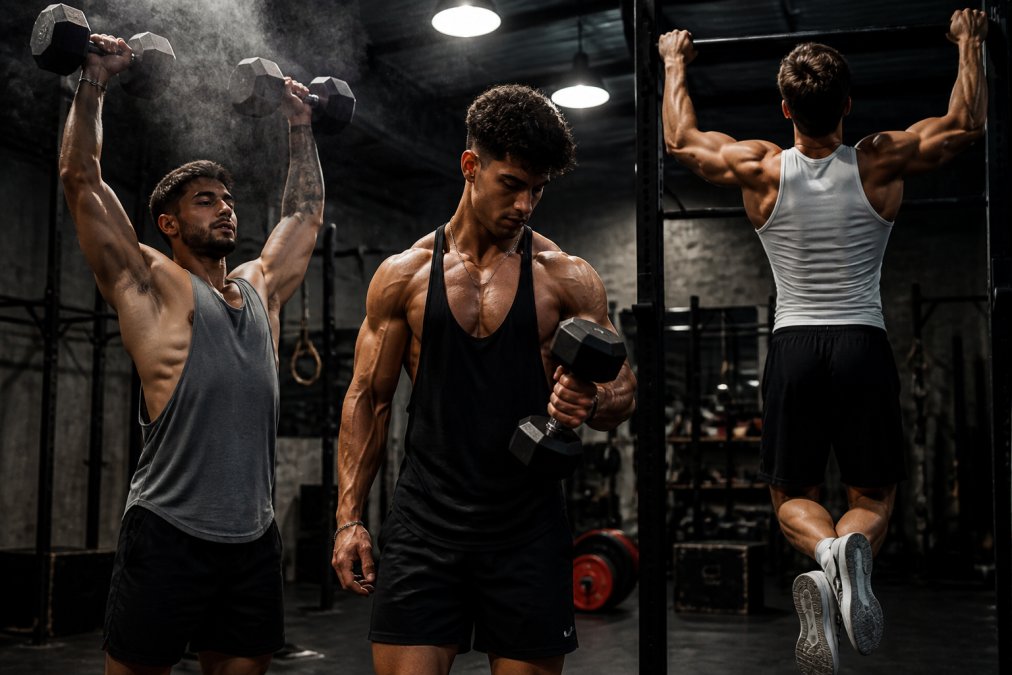
Muscle Tanks: Maximum Range of Motion for Compound Lifts
Muscle tanks feature wide armholes that extend down the ribcage and a fuller back panel. This design allows complete shoulder rotation during overhead presses, pull-ups, and front squats without fabric bunching. The best muscle tanks have armhole seams that are bound or hemmed rather than raw-cut, preventing the edges from rolling or fraying. Look for a drop-tail hem that stays tucked during deadlifts and bent-over rows.
For proper muscle tank fit, the armhole should sit 2-3 inches below your shoulder point. The side seam should run vertically from armpit to hip without pulling. A well-fitted tank allows overhead arm raises without the hem lifting more than 1-2 inches above your waistband.
Stringers: Minimal Coverage, Maximum Arm Visibility
Stringers cut the side fabric away entirely, leaving thin straps over the shoulders. Bodybuilders favor them for shoulder and arm days because they provide unrestricted movement and show off the deltoids and triceps. The tradeoff is less fabric to manage sweat and thinner straps that can dig in during heavy carries. They work best for pump training and hypertrophy work rather than heavy compound lifting.
Stringers demand precise fit because there's no side fabric to accommodate sizing variation. Shoulder straps should be 1-1.5 inches wide; narrower straps create pressure points during loaded carries. The armhole should expose the full deltoid without creating friction in the anterior shoulder during pressing. If you experience shoulder discomfort, the armhole is likely cut too high.
Fitted Tanks: Compression and Control for High-Intensity Work
Fitted tanks use compression-knit fabric with 4-way stretch to hug the torso while allowing full range of motion. They work best for CrossFit, HIIT, and metabolic conditioning where loose fabric creates drag. The compression feel provides proprioceptive feedback for maintaining posture during explosive exercises.
Fitted tanks should compress snugly against your ribs without restricting breathing; you should be able to take a full breath without the fabric pulling or creating pressure. The armhole should be cut lower than a stringer (sitting 1-2 inches below the shoulder point) to prevent shoulder impingement during pull-ups and rope climbs. Fitted tanks typically run small, so size up if you're between sizes or if you have a broader chest.
Body-Type Specific Fit: Finding Your Cut
For broad shoulders and narrow waist: Choose a muscle tank with a tapered side seam. Avoid stringers with high armholes, as they create friction during pressing and look disproportionate. Fitted tanks with compression emphasize your V-taper without loose fabric distraction.
For thicker torso and shorter frame: Avoid stringers, high armholes create friction and expose unwanted areas. Choose a muscle tank with shorter body length (XS or S) to prevent hem riding up during pull-ups. Fitted tanks work if compression is snug without excess fabric pooling.
For lean frame and longer torso: Choose muscle tanks with longer drop-tail hems to prevent riding up during hanging work. Stringers work well because minimal fabric won't bunch. Size fitted tanks down to avoid excess compression that looks baggy.
For athletic build (balanced shoulders and torso): All three styles work, so choose based on your primary training focus. Muscle tanks for compound lifting, stringers for arm-focused days, fitted tanks for conditioning work.
How to Choose Gym Apparel: Durability, Odor Control, and Layering
Choosing gym apparel requires evaluating three factors beyond fit: how the garment survives repeated washing, whether it resists odor buildup, and how well it transitions from the gym floor to everyday wear.
Durability Testing: What Holds Up Through Months of Heavy Training
The most common failure points are shoulder seams (where fabric rubs against a barbell) and hems (which stretch after repeated wear). Reinforced flatlock seams lie flat and resist chafing. Fabric weight matters: tanks under 150 GSM feel light but become sheer and lose shape. Quality tanks use 180-220 GSM fabric that maintains structure through hundreds of washes without pilling (astm.org).
Test durability by counting stitches per inch along the shoulder seam, quality tanks have 8-10, budget options 5-6. Check armhole binding: premium tanks use bound or hemmed edges that won't curl, while cheaper alternatives use raw-cut edges that roll after 10-15 washes. Wash in cold water inside-out on gentle cycle and air-dry. After 20 washes, inspect for hem stretching and seam separation, quality construction shows no visible degradation.
Antimicrobial Treatments and Odor-Resistance: How Long They Actually Last
Synthetic fabrics trap odor-causing bacteria more aggressively than cotton because they don't absorb moisture. Antimicrobial treatments embed silver ions, zinc compounds, or copper nanoparticles into the fabric to create a hostile environment for bacterial growth. However, effectiveness degrades with repeated laundering.
Silver-ion treatments maintain efficacy for 30-50 wash cycles; zinc-based treatments last 50-75 cycles; copper nanoparticles claim 100+ washes (peer-reviewed research). To preserve effectiveness, wash in cold water, avoid fabric softeners, and air-dry rather than machine-dry.
Rotating between two or three tanks extends both antimicrobial effectiveness and fabric life. A tank worn three times per week experiences one-third the bacterial load of daily wear. If odor persists, soak in white vinegar (1:4 ratio) for 30 minutes before washing to neutralize bacteria.
Versatility: From Gym to Streetwear
A quality tank should move beyond the gym floor. Darker colors with minimal branding layer well under open shirts for a casual post-workout look. Tanks with clean, athletic cuts and premium fabric weight read as intentional style rather than gym laziness.
Sustainability in Gym Tank Tops: Eco-Friendly Options Without Compromise
Recycled polyester, made from post-consumer plastic bottles, now matches virgin polyester in moisture-wicking and durability while using significantly less water and energy to produce. Look for Global Recycled Standard (GRS) certifications to verify recycled content. Bamboo and hemp blends offer natural alternatives with decent moisture management, though they lack 4-way stretch. Recycled polyester tanks deliver performance without the ecological cost of virgin synthetics.
Tank Tops for High-Intensity Training: Performance Fabrics That Deliver
High-intensity interval training demands fabric that manages sudden sweat spikes while maintaining thermal regulation. Compression-fit tanks with 4-way stretch support muscle groups during box jumps and burpees while preventing fabric from riding up. Look for seamless construction in high-friction zones to prevent chafing. Quick-dry technology is critical when doing multiple circuits, a wet tank adds weight and causes discomfort.
Conclusion: Invest in Tanks That Match Your Training Philosophy
The best tank tops for gym training are the ones that disappear during your workout, letting you focus entirely on the lift. Fabric technology determines moisture management, fit engineering determines range of motion, and construction quality determines longevity. JACKED N TAN designs premium fitness-inspired apparel that bridges the gap between heavy training sessions and everyday streetwear, built for those who treat discipline and progress as a lifestyle. Our tanks are crafted to deliver comfort and confidence whether you're chasing a PR or grabbing coffee after training. American Council on Exercise training apparel guidance confirms that proper activewear supports both performance and recovery.
Shop the drop and wear your strength.
Frequently Asked Questions
What fabric is best for gym tank tops?
Polyester-based synthetic blends outperform cotton for gym use. Polyester and nylon provide superior moisture-wicking, quick-dry properties, and durability through repeated washing. Look for 4-way stretch blends that offer both breathability and range of motion during heavy lifting. Mesh panels in high-sweat areas enhance cooling technology and prevent chafing during high-intensity interval training.
What's the difference between a stringer and a muscle tank?
A stringer features thin shoulder straps and minimal chest coverage, maximizing arm visibility and shoulder mobility for isolation exercises. A muscle tank has wider armholes and more chest coverage while still allowing full range of motion. Stringers suit bodybuilders prioritizing aesthetics; muscle tanks work better for powerlifters needing stability during compound movements. Both are sleeveless designs, but muscle tanks provide more structural support.
How should a gym tank top fit?
A proper gym tank top should fit snug through the chest and shoulders without restricting movement. Armholes should allow full shoulder rotation without chafing. The length should hit mid-hip, preventing ride-up during exercises. For muscle tanks, the fit should be ergonomic around the torso. Test fit by performing your typical lifts, overhead presses, rows, and lateral raises, to ensure no binding or excessive looseness. Body-type matters: broader shoulders need wider cuts; leaner builds suit tapered fits.
Are cotton tank tops bad for working out?
Cotton absorbs and retains sweat rather than wicking it away, leaving you damp and cold during rest periods. This reduces comfort, increases chafing risk, and extends drying time after washing. Cotton also lacks the durability of synthetic blends, degrading faster through repeated gym sessions and washing cycles. Performance fabrics with moisture-wicking properties keep you dry and maintain structural integrity through intense training, making them superior for gym use.
What makes a tank top suitable for high-intensity training?
High-intensity interval training demands lightweight, breathable fabrics with strong moisture management and quick-dry technology. Look for 4-way stretch materials that support explosive movements and dynamic range of motion. Mesh panels improve cooling and ventilation. Anti-odor treatments become critical since sweat accumulates faster. Durable seams and reinforced armholes prevent breakdown during repetitive, intense movements. A fitted athletic cut keeps the garment in place during cardio and plyometric work.
This article was written using GrandRanker