

Table of Contents
- Why Gym Streetwear Outfits Work for Lifting and Everyday Wear
- The Best Tank Tops for Gym Sessions and Layering
- The Oversized Gym Hoodie: Fit, Sizing, and Movement
- T-Shirts and Long Sleeves That Handle Heavy Training
- Workout Clothes for Everyday Wear: Commuting and Post-Gym Style
- Caps and Finishing Pieces for Gym Streetwear
- Price and Value: What Gym Streetwear Actually Costs
- Conclusion: Build Your Gym Streetwear Wardrobe
- Frequently Asked Questions
Last Updated: October 7, 2026
Why Gym Streetwear Outfits Work for Lifting and Everyday Wear
Stylish streetwear for gym goers is performance apparel built on streetwear silhouettes: relaxed fits, heavyweight cotton blends, and pieces that move from the squat rack to the street without a costume change.
The logic is simple. A training top has to survive a heavy session, then look right at the coffee shop twenty minutes later. That means fabric weight, seam construction, and fit all matter more than logos.
Below, we break down the pieces that make up a complete gym streetwear wardrobe, what each one costs, and how to size them so they actually work under a barbell.
The Best Tank Tops for Gym Sessions and Layering
The best tank tops for gym use are cut with a relaxed fit and a drop arm so your shoulders and lats move freely through presses, rows, and pull-ups. Our Men's premium tank top ($32.58) is made from 100% combed ring-spun cotton with a soft-washed, tight-knit mid-to-heavyweight feel.

That weight matters. Thin tanks cling and show every sweat mark. A heavier knit holds its shape and drapes cleanly, which is why it works as a standalone training piece or a layering base under a hoodie.
Sizing runs S through 3XL, with a chest width from 45.7 cm at small up to 71.1 cm at 3XL. If you are between sizes and want the oversized look, size up one.
Fabric trade-offs: cotton versus technical synthetics
Most gym streetwear guides skip this part, and it is the part that decides whether a tank actually works under a barbell. Here is how the common fabrics behave:
- 100% combed ring-spun cotton (what we use): soft hand feel, drapes like streetwear, breathes well in dry heat. The trade-off is that it absorbs sweat rather than pushing it away, so it gets heavy during long cardio and takes longer to dry. It is the right choice for lifting, short sessions, and layering, not for hour-long sweat-heavy training.
- Cotton-poly blends (typically 50/50 or 60/40): the middle ground. Polyester adds durability and speeds drying, while cotton keeps the streetwear look. Blends resist shrinking and pilling better than pure cotton over repeated washes. This is the most common fabric in gym-ready streetwear for good reason.
- 100% polyester technical knits: best sweat management and fastest drying, but they read as performance gear, not streetwear. They also hold odor more stubbornly than cotton if you do not wash them promptly. Good for cardio, less good for the coffee-shop half of the day.
Weight and weave: why a heavier knit wins
Fabric weight is measured in grams per square meter (GSM). Lightweight knits, roughly 140-160 GSM, feel thin, cling when damp, and show sweat immediately. Mid-to-heavyweight knits, roughly 180-220 GSM, hold their shape, drape cleanly, and hide sweat marks better. For a gym tank that doubles as streetwear, aim for the mid-to-heavyweight range. That is the single biggest difference between a tank that looks intentional and one that looks like an undershirt.
Fit and movement: how to size an oversized tank
An oversized tank should clear three checkpoints before you commit to it:
- Armhole depth: with your arm raised overhead, the armhole should not pull tight across the chest or expose more than you intended. A drop arm gives you room; too deep a drop means the tank shifts during rows.
- Shoulder seam placement: on an oversized cut, the seam sits slightly past your natural shoulder line. If it sits on top of your shoulder, the tank is a classic fit, not oversized.
- Hem length: the hem should land around mid-hip. Longer and it bunches under a belt or during hip hinges; shorter and it rides up on overhead presses.
If you are between sizes, size up one for the oversized look. Sizing up two usually backfires: the armholes drop too far, the straps slide, and the tank stops functioning as a training piece.
The Oversized Gym Hoodie: Fit, Sizing, and Movement
An oversized gym hoodie works when the shoulders sit slightly past your natural shoulder line and the hem lands at mid-hip, not below it.
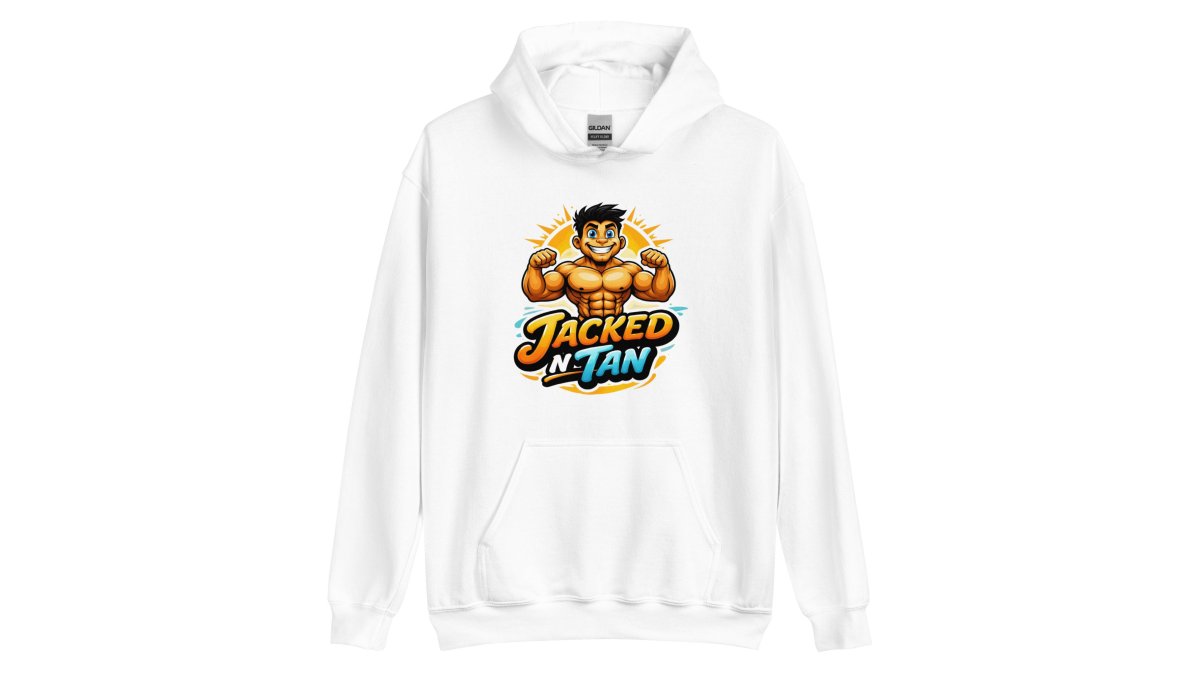
Our Unisex Hoodie ($44.50) is a 50/50 cotton-poly blend with air-jet spun yarn, which cuts pilling and keeps the surface soft after repeated washes.

Sizing runs S to 5XL, with a 27-inch length at small up to 34 inches at 5XL.
T-Shirts and Long Sleeves That Handle Heavy Training
A training tee earns its place through stitching, not graphics. Our Short-Sleeve Unisex T-Shirt ($18.88) uses 100% ring-spun cotton with shoulder-to-shoulder taping and double stitching at the neckline and sleeves.

For colder sessions or a layered look, the Men's Long Sleeve Shirt ($29.58) is 100% pre-shrunk cotton with rib cuffs and a taped neck and shoulders.
Both run S through 3XL, and the long sleeve extends to 4XL. The classic fit sits close without compressing, so it works under a hoodie without adding bulk.
Workout Clothes for Everyday Wear: Commuting and Post-Gym Style
Workout clothes for everyday wear need to pass one test: would you wear this into a store on the way home? If the answer is no, it is gym-only gear.
Most competitors stop there. The useful part is the layering system, because the same three pieces behave differently depending on whether you are walking in cold, training hot, and cooling down damp.
The three-layer commute formula
Think in three layers, not five items:
- Base layer (against skin): a premium tank top or short-sleeve tee. This is the layer that touches sweat, so it should be the most breathable piece you own. Ring-spun cotton works here because it wicks moderately and does not hold odor the way some synthetics do after repeated wear.
- Mid layer (temperature control): a long sleeve shirt for cooler mornings. This is the layer you strip first once you warm up, so it should be easy to remove without pulling your base layer up with it. Rib cuffs and a taped neck help here.
- Outer layer (street-facing): a unisex hoodie, worn open on the way in and tied around your waist or stuffed in a locker during the session. The hoodie is the piece that makes the outfit read as streetwear rather than gym wear, so it carries the visual weight.
Match the system to the activity
A commute-to-training outfit is not one outfit. It flexes by session:
- Lifting days: keep the base layer fitted enough that a barbell does not catch fabric, and keep the outer layer loose enough to pull off between sets. A tank plus open hoodie is the standard pattern.
- Cardio days: skip the mid layer entirely. You will overheat before you finish the warmup. Base layer plus a light outer layer you can shed within five minutes is the practical ceiling.
- Studio days (yoga, mobility, pilates): prioritize the base layer. You will not wear the hoodie during the session, so the base layer has to look intentional on its own. A short-sleeve tee in a solid color reads better here than a graphic tank.
The post-gym transition
The transition is where most gym outfits fall apart. You finish damp, the locker room is warm, and you have errands to run. Two habits fix this:
- Swap the base layer, keep the outer layer. A fresh tee under the same hoodie changes the entire read of the outfit and takes thirty seconds.
- Carry one color family. If your bottoms, hoodie, and cap sit in the same family (black, charcoal, olive, or sand), any base layer you swap in will match. This is why a neutral-heavy wardrobe is more practical than a graphic-heavy one for people who train most days.
What to avoid
- Full synthetic base layers for everyday wear. They look like performance gear under daylight and hold odor longer between washes.
- Heavyweight hoodies in summer. A 50/50 cotton-poly blend breathes better than a 100% heavyweight cotton fleece once temperatures climb.
- Skin-tight bottoms with an oversized top. The proportions fight each other. If the top is oversized, the bottom should be relaxed or straight, not compressive.
Caps and Finishing Pieces for Gym Streetwear
A cap finishes the outfit and handles a practical job: keeping hair and sweat out of your face between sets. Our Snapback Hat ($40.88) is a structured six-panel with a flat visor, a green undervisor, and a plastic snap closure.
The Trucker Cap ($42.88) takes the opposite approach: a curved visor and breathable mesh panels at the back, which run cooler during long sessions. The adjustable snapback fits most head sizes.
Price and Value: What Gym Streetwear Actually Costs
Gym streetwear pricing splits into two tiers: entry pieces and outerwear. Here is where our line sits.
| Piece | Price | Fabric | Sizes | Best For |
|---|---|---|---|---|
| Short-Sleeve Unisex T-Shirt | $18.88 | 100% ring-spun cotton | S-3XL | Daily training and layering |
| Men's Long Sleeve Shirt | $29.58 | 100% pre-shrunk cotton | S-4XL | Cold sessions, layering |
| Men's premium tank top | $32.58 | 100% combed ring-spun cotton | S-3XL | Heavy lifting, summer training |
| Snapback Hat | $40.88 | 80% acrylic, 20% wool | One size | Finishing piece, flat visor |
| Trucker Cap | $42.88 | 60% cotton, 40% polyester | One size | Hot sessions, breathable back |
| Unisex Hoodie | $44.50 | 50% cotton, 50% polyester | S-5XL | Warmups, commuting, oversized fit |
A full outfit, tee plus hoodie plus cap, lands around $104. That is a real number, and it is worth comparing against replacing cheap blanks every few months. The construction details here, double-needle stitching, taped shoulders, rib-knit cuffs, are what decide whether a piece lasts one season or several.
Conclusion: Build Your Gym Streetwear Wardrobe
Building a wardrobe that works in the gym and on the street comes down to fabric weight, stitch quality, and honest sizing. Get those right and you stop buying replacements every few months.
At JACKED N TAN, every piece is built for that dual purpose: premium fitness-inspired apparel with double-needle construction, ring-spun cotton, and fits that run S to 5XL.
SHOP THE DROP and wear your strength.
Frequently Asked Questions
What makes gym clothes suitable for streetwear?
Gym clothes work as streetwear when the fit and fabric bridge both settings. Look for pieces with a relaxed or oversized fit, like a 50/50 cotton-poly hoodie that keeps its shape, or a 100% ring-spun cotton tee with double-stitched necklines. Neutral colors and clean silhouettes matter more than logos. The key is that the piece looks intentional outside the gym, not just functional inside it.
How do you style gym clothes for everyday wear?
Layer a tank top under an oversized hoodie, then swap training shoes for casual sneakers after your session. A fitted tee or tank works as a base layer, and a hoodie or long-sleeve shirt goes over it for commuting. Caps finish the look and hide post-workout hair. Stick to two or three colors per outfit so the transition from gym to street feels deliberate rather than accidental.
What should you wear to the gym to look stylish?
Start with a fitted base layer like a premium tank top or ring-spun cotton tee, then add an oversized hoodie for warmth and coverage. Gym shorts or joggers complete the lower half. Choose pieces that fit well in the shoulders and chest, since that is where most gym apparel fails. A structured snapback or trucker cap adds a finishing touch without looking like you tried too hard.
How can you build a versatile gym-to-street wardrobe?
Buy pieces that work in both settings. A unisex hoodie at $44.50, a premium tank top at $32.58, and a short-sleeve tee at $18.88 cover most training sessions and casual outings. Add a long-sleeve shirt at $29.58 for cooler days and a cap for finishing. Stick to a tight color palette so everything mixes. Five to seven pieces can cover a full week of gym and street wear.
Do oversized gym clothes affect your range of motion?
Oversized fits give you more room through the shoulders and chest, which helps during pressing and overhead movements. The trade-off is extra fabric that can catch on equipment or bunch during floor work. Look for hoodies with rib-knit cuffs and waistbands that keep the fit secure, and check the size guide before ordering. A hoodie that is one size up usually gives enough room without swallowing your frame.