

Table of Contents
- The 70/30 Rule: How to Build a Gym Wardrobe That Works
- Essential Gym Wear for Beginners: Your Starter Checklist
- Quality Gym Clothes for Men: Fabrics, Fit, and Movement Tests
- Building a Versatile Gym Wardrobe on a Budget
- How to Care for Performance Apparel So It Lasts
- Seasonal Layering and Storage for Your Gym Wardrobe
- Conclusion: Wear Your Strength
- Frequently Asked Questions
Last Updated: October 15, 2026
The 70/30 Rule: How to Build a Gym Wardrobe That Works
Most people overbuy activewear and underthink it. To build gym wardrobe staples that earn their drawer space, start with the 70/30 rule: roughly 70% neutral, versatile training gear and 30% expressive, lifestyle-driven items. That split covers leg day, cardio, and coffee runs without a closet full of regret.
Most guides say "buy quality pieces" and stop there. What you need is a number.
How Many Pieces Do You Actually Need?
A functional gym wardrobe is 10 to 14 pieces for most lifters training three to four days per week, roughly one week of sessions plus a rest day, assuming weekly laundry.
Here's how that breaks down by training frequency:
| Training Frequency | Tops | Bottoms | Support Layer | Total Pieces |
|---|---|---|---|---|
| 2-3 days/week | 4-5 | 3 | 2 | 9-10 |
| 4-5 days/week | 6-7 | 4 | 3 | 13-14 |
| 6+ days/week | 8-10 | 5-6 | 4 | 17-20 |
Laundry is the real constraint. Train five days a week with three shirts and you're doing laundry every 48 hours, a wardrobe problem disguised as a discipline problem.
Essential Gym Wear for Beginners: Your Starter Checklist
Essential gym wear for beginners comes down to four categories: a moisture-wicking top, a flexible bottom, a supportive sports bra or base layer, and quality socks. Everything else is optional until you know your training style.
Work through this starter checklist before you buy anything else:
- Two to three sweat-wicking tops (tank, tee, or long sleeve depending on climate)
- Two bottoms that pass a full squat and lunge test
- One support layer sized for your chest and impact level
If you're new to training, resist buying twelve matching outfits. A neutral short-sleeve training tee covers lifting, cardio, and everyday wear; the men's premium tank top is better once you train in heat or want an unrestricted shoulder line for pressing.


The CDC's physical activity guidelines recommend at least 150 minutes of moderate activity weekly, three to five sessions for most people. Build your wardrobe around that number.
Quality Gym Clothes for Men: Fabrics, Fit, and Movement Tests
Quality gym clothes for men are defined by three things: fabric that moves sweat away from skin, a fit that allows full range of motion, and construction that survives repeated washing.
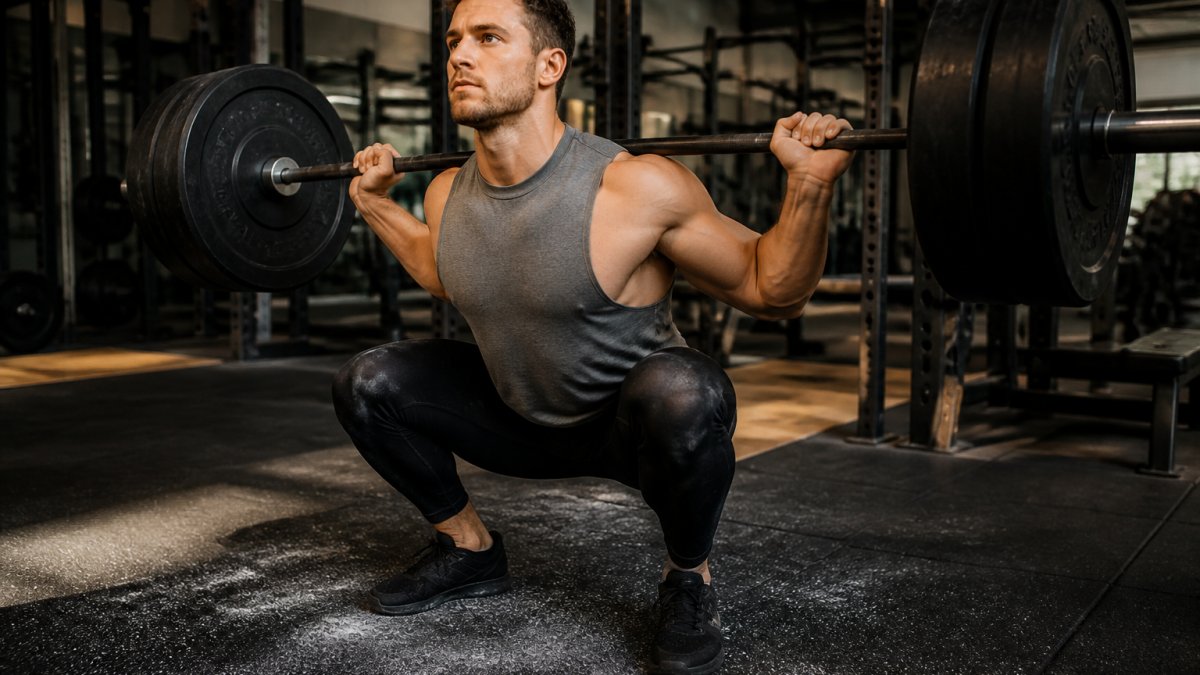
Before you buy anything, run three movement tests in the fitting room or at home:
- The overhead reach. Raise both arms fully. If the shirt rides up past your waist or pulls tight across the chest, size up or change the cut.
- The deep squat. Drop into a full squat. If the fabric restricts your hips or the waistband digs in, that piece fails.
- The shoulder roll. Roll your shoulders forward and back. Tight armholes or rigid seams mean chafing under load.
A common mistake is buying for the mirror instead of the movement. A shirt that looks sharp standing still but binds during a bench press will sit in your drawer.
Sweat-Wicking vs. Cotton: What to Wear for Different Workouts
Sweat-wicking synthetics win for high-sweat, high-intensity sessions; cotton wins for low-intensity work and everyday wear. Match fabric to session.
- Heavy lifting: Cotton or cotton-blend tees work well because lifting is lower-sweat and you want grip and structure.
- Running and conditioning: Sweat-wicking synthetics, no exceptions. Wet cotton clings and chafes.
- Yoga and mobility: Soft, stretchy blends with a relaxed fit.
The unisex hoodie is a good example of a piece that works in both worlds: warm-up layer at the gym, casual layer everywhere else.

Building a Versatile Gym Wardrobe on a Budget
A versatile gym wardrobe on a budget is built by buying fewer, better pieces, calculating cost per wear, and shopping in tiers instead of all at once.
Cost per wear is simple: divide price by the number of times you'll realistically wear the piece. A $20 shirt worn twice before it pills costs $10 per wear; a $30 shirt worn 60 times costs $0.50 per wear.
The Three-Tier Shopping Plan
Build in tiers so you never replace an entire wardrobe at once.
- Tier 1, Foundation (buy first). Two to three sweat-wicking tops, two bottoms that pass a full squat and lunge test, one support layer, and three to five pairs of cushioned socks. This tier covers your first month of training and tells you what you actually reach for.
- Tier 2, Rotation (buy after 30 days). Add pieces based on your real training pattern: a second support layer if you train four or more days per week, a long sleeve or hoodie if you train in cool conditions, and one extra bottom so laundry never dictates your schedule.
- Tier 3, Specialization (buy after 90 days). Add sport-specific items only once you know your primary mode: a looser cut for lifting, a closer fit for running, or a stretch blend for yoga and mobility.
Cost-Per-Wear Targets by Category
Use these wear-count targets to judge whether a piece is worth its price. They are planning benchmarks, not guarantees.
| Category | Target Wears Before Replacement | What Drives the Number |
|---|---|---|
| Tops | 50-80 | Fabric weight, seam construction, print method |
| Bottoms | 60-100 | Waistband elasticity, seam stitching, fabric stretch recovery |
| Support layer | 40-60 | Elastic band life, strap hardware, cup structure |
| Socks | 30-50 | Cushion compression, heel and toe reinforcement |
| Layering piece | 80-120 | Zipper or drawcord hardware, fabric pilling resistance |
If a piece can't clear its category target, its true cost per wear is higher than the sticker price suggests, the signal to buy fewer, better pieces rather than a five-for-$30 multipack.
Budget Rules That Actually Change Behavior
- Buy neutrals first. Black, grey, and white mix with everything and hide sweat, so each piece earns more wears and lowers cost per wear.
- Test one piece before buying three. Fit varies by cut, not just size. One test purchase prevents a three-piece mistake.
- Prioritize the layers you sweat in most. Tops and bottoms first, accessories last. Sweat-heavy pieces fail fastest, so they deserve the largest share of your budget.
- Set a per-category cap. Decide the maximum you will pay for a top, a bottom, and a support layer before you shop. Caps stop impulse upgrades.
- Track actual wears for 30 days. Most people overestimate how often they wear expressive pieces and underestimate how often they reach for neutral staples.
Our men's long sleeve shirt is a budget-smart buy: a standalone training top in cooler months and a layering piece year-round, so it earns wear across seasons and clears a higher wear-count target than a single-purpose top.
How to Care for Performance Apparel So It Lasts
How to care for performance apparel comes down to three habits: wash cold, skip fabric softener, and air dry.
Fabric softener is the biggest offender: it coats fibers and blocks the moisture-wicking properties you paid for. Skip it on anything labeled performance or sweat-wicking.
A practical routine:
- Wash in cold water with a mild detergent
- Turn pieces inside out to protect prints
- Skip the dryer or use low heat only
Odor control is where most people lose the battle. Bacteria trapped in synthetic fibers cause the smell, not sweat itself.
Seasonal Layering and Storage for Your Gym Wardrobe
Seasonal layering for a gym wardrobe means adding insulation in cold months and breathable single layers in warm ones without rebuilding your closet. Core pieces stay the same year-round; only the outer and mid layers change. Below is a stack you can actually build, plus storage that protects the investment.
The Layering Stack by Condition
Think in three functional layers, adding or removing based on conditions.
- Base layer (always). A moisture-wicking top in a light or mid weight. This is the layer that touches skin and moves sweat away. Cotton belongs here only for low-sweat sessions.
- Mid layer (cool conditions). A long sleeve or hoodie that traps warmth without blocking breathability. Choose a fabric with some stretch so it does not bind during pressing or pulling.
- Shell (outdoor cold or wind). A light wind-resistant layer for outdoor sessions. Indoors, skip the shell and rely on the mid layer.
A practical rule: outdoors below roughly 50°F, add the mid layer; below roughly 35°F, add the shell. Indoors, a hoodie or long sleeve over a tee covers most winter sessions. In summer, tanks and lightweight tees do the work, choose fabrics that breathe rather than trap heat.
Hot-Weather and Indoor-Gym Adjustments
Heat changes fabric priority, not piece count. In hot conditions, favor lighter weights and looser cuts so air moves across skin. In a climate-controlled gym, keep the same base layer year-round and add the mid layer only for warm-up and cool-down. The mistake is dressing for the outdoor temperature when you'll spend the session indoors.
Storage That Protects Performance Fabrics
Storage keeps your wardrobe functional and extends garment life.
- Roll, don't fold, for drawers to save space and reduce creases in stretch fabrics.
- Hang hoodies and long sleeves to protect their shape and prevent shoulder stretching.
- Use under-bed containers for off-season pieces, and store them clean and fully dry.
A capsule approach helps: store off-season items out of the way and keep only the current rotation in your drawer. For a year-round rotation, a hoodie and a long sleeve cover the cold months while tanks and tees handle the rest.
When to Replace Worn Gear
Most people replace gear when it looks bad, not when it stops working. Watch for these failure signals:
- Pilling and thinning in high-friction areas like underarms and inner thighs
- Lost stretch recovery, fabric that stays stretched after you take it off
- Permanent odor that survives washing and a vinegar soak
When a piece hits two or more signals, it has passed its useful life and its cost per wear is climbing. Replace it with a piece that clears your category wear-count target rather than patching it indefinitely.
Conclusion: Wear Your Strength
Building a gym wardrobe isn't about owning more clothes. It's about owning the right ones and knowing why each piece is there. Get the fit right, match fabric to your training, care for what you buy, and your wardrobe will outlast three cheap rotations.
That's the standard at JACKED N TAN. Our apparel is made for intense training and everyday wear, with a focus on comfort, fit, and steady progress.
Frequently Asked Questions
What is the 70/30 rule for building a gym wardrobe?
The 70/30 rule means 70% of your gym wardrobe should be versatile, neutral pieces you can mix and match, and 30% should be specialized gear for specific workouts. For example, buy three plain tees and two pairs of training shorts (the 70%), then add a singlet for heavy lifting days or a long-sleeve for outdoor runs (the 30%). This keeps your gym wardrobe functional without overspending.
What are the essential items for a men's gym wardrobe?
Start with moisture-wicking tops, pairs of shorts or leggings, and hoodies for warm-up or cool-down. Add socks designed for training and a durable pair of shoes. For quality gym clothes for men, look for sweat-wicking fabrics and flatlock seams to prevent chafing. A functional capsule covers most weekly workouts.
How often should you replace your gym apparel?
Replace gym apparel when it shows signs of wear and tear, such as stretched elastic, permanent odor, thinning material, or lost shape. High-frequency training wears out fabrics faster. Proper care extends lifespan. Wash in cold water and air-dry to get more months out of each piece.
How do I care for performance apparel so it lasts longer?
Turn garments inside out, wash in cold water with like fabrics, and skip fabric softener because it clogs sweat-wicking fibers. Air-dry when possible; if using a dryer, choose low heat. Wash immediately after training to prevent odor-causing bacteria from setting in. This routine keeps performance apparel fresh and extends its life by months.
What fabrics are best for high-intensity workout clothes?
For high-intensity training, choose polyester or nylon blends with spandex for stretch. These fabrics pull sweat away from your skin and dry quickly. Cotton is comfortable for low-impact or casual wear but holds moisture and gets heavy. Look for breathable mesh panels in high-sweat zones like the back and underarms.
Start with the pieces that earn their place. Shop the JACKED N TAN drop and build a wardrobe that keeps up with your training.