

Table of Contents
- Quick Comparison: Fitness Apparel for Serious Lifters
- How We Evaluated This Lifting Apparel
- Men's Premium Tank Top: Best for Squats, Deadlifts, and Presses
- Short-Sleeve Unisex T-Shirt: Best Everyday Gym Staple
- Best Workout Hoodies for Heavy Lifting: Unisex Hoodie Review
- Men's Long Sleeve Shirt: Best for Warm-Ups and Recovery Days
- Maintaining Gym Apparel for Longevity: Care Tips That Work
- Benefits of Compression Gear for Lifters: What to Know Before You Buy
- Frequently Asked Questions
Last Updated: September 16, 2026
Quick Comparison: Fitness Apparel for Serious Lifters
Fitness apparel for serious lifters is built to survive repeated heavy loading, not just look the part between sets. Fitness apparel for serious lifters is built to survive repeated heavy loading, not just look the part between sets. The difference comes down to fabric weight, seam construction, and how the cut behaves through a full range of motion.
| Product | Price | Fabric | Best For | Fit |
|---|---|---|---|---|
| Men's Premium Tank Top | $32.58 | 100% combed ring-spun cotton | Squats, deadlifts, presses | Relaxed, drop arm |
| Short-Sleeve Unisex T-Shirt | $18.88 | 100% ring-spun cotton | Everyday gym staple | Fitted |
| Unisex Hoodie | $44.50 | 50% cotton, 50% polyester | Warm-ups, heavy lifting | Classic |
| Men's Long Sleeve Shirt | $29.58 | 100% pre-shrunk cotton | Warm-ups, recovery days | Classic |
How We Evaluated This Lifting Apparel
Every piece here was judged on four criteria: fabric weight and shape retention, seam reinforcement at stress points, how the cut moves through a full squat or overhead press, and whether it works outside the gym. A tank top that rides up during a deadlift setup fails no matter how good it looks in a mirror.

Fabric weight: the number most shoppers never check
Fabric weight is measured in grams per square meter (GSM), the single best predictor of whether a shirt survives a training block. Lightweight knits run roughly 120-150 GSM and stretch out at the neckline and armholes under a loaded bar. Midweight knits sit around 150-200 GSM, the sweet spot for most lifters.
Moisture-wicking: how the mechanism actually works
Moisture-wicking fabric moves sweat away from your skin through capillary action along the fiber surface, then spreads it across a wider area so it evaporates faster. Two things make that work:
- Hydrophobic fibers like polyester, nylon, and polypropylene do not absorb water, so sweat travels along the surface instead of soaking in.
- Hydrophilic fibers like cotton and viscose absorb water, which is why a pure cotton tee holds sweat and gets heavy on high-volume days.
Fit for athletic frames: why standard sizing fails lifters
Off-the-rack sizing is built for average proportions, not a lifter with a 46-inch chest and 34-inch waist. The result: a shirt that fits the chest pulls tight across the lats and rides up during an overhead press, while one that fits the waist hangs loose at the shoulders and catches the bar path on squats.
Three fit adjustments matter most for muscular builds:
- Drop arm and wider armholes clear the bar path on squats and pressing work without binding at the shoulder.
- Tapered waists with roomy chests keep the hem from riding up during a deadlift setup.
- Stretch panels or a small percentage of spandex in the fabric let the garment move through a full squat depth instead of restricting it.
Seam construction: where cheap gear fails first
Look at the shoulder and armhole seams first. Flatlock or taped seams distribute stress across a wider area than a standard overlock stitch, which is why they survive repeated loading. Double-needle stitching at the collar, cuffs, and hem adds a second line of defense, and quarter-turning the body panel prevents the twisted center crease cheaper shirts develop after a few washes.
What we did not include
We left out anything with a high percentage of rayon or bamboo viscose in a load-bearing panel, because those fibers lose strength when wet and stretch permanently under tension. We also skipped glued or bonded seams in high-stress areas, they look clean on the rack but delaminate after repeated washing and heavy use.
Men's Premium Tank Top: Best for Squats, Deadlifts, and Presses
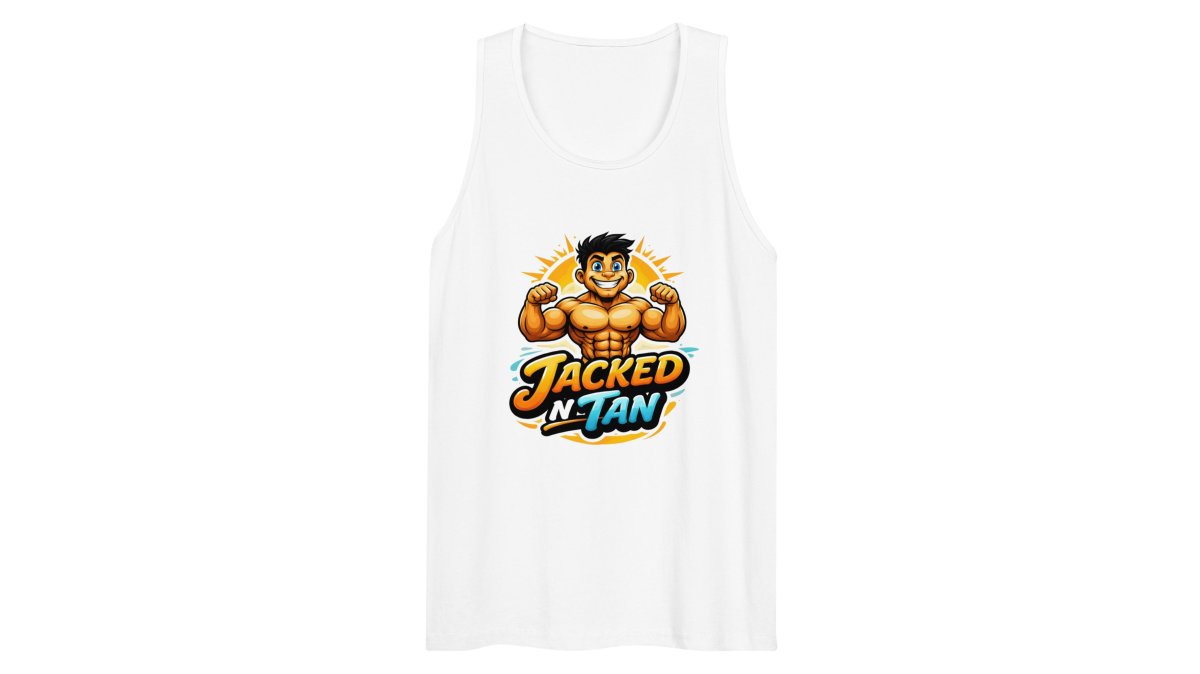
The Men's Premium Tank Top is the best pick for the big three lifts because its sleeveless drop arm and relaxed fit keep the bar path clear on squats and pressing work. It's built from 100% combed ring-spun cotton with a soft-washed, tight-knit mid/heavyweight feel that resists the stretching cheaper tanks develop.
Short-Sleeve Unisex T-Shirt: Best Everyday Gym Staple
The Short-Sleeve Unisex T-Shirt is the piece you'll reach for most often, and at $18.88 it's the cheapest way to test whether the fabric quality holds up to your training schedule. It's 100% ring-spun cotton with shoulder-to-shoulder taping and double stitching at the neckline and sleeves, the reinforcement that keeps a tee from twisting after a few washes.

Best Workout Hoodies for Heavy Lifting: Unisex Hoodie Review
The Unisex Hoodie handles that balance with a 50/50 cotton-polyester blend and air-jet spun yarn that cuts pilling, the fabric balls that make old hoodies look worn out fast. The Unisex Hoodie handles that balance with a 50/50 cotton-polyester blend and air-jet spun yarn that cuts pilling, the fabric balls that make old hoodies look worn out fast.

Men's Long Sleeve Shirt: Best for Warm-Ups and Recovery Days
The Men's Long Sleeve Shirt is the right layer for warm-ups and lighter recovery sessions, when you want coverage without the bulk of a hoodie. It's 100% pre-shrunk cotton with a classic fit, rib cuffs, and a seamless double-needle collar, so it won't shrink into a crop top after the first wash.
Maintaining Gym Apparel for Longevity: Care Tips That Work
Maintaining gym apparel for longevity comes down to three habits: wash cold, skip the fabric softener, and air dry when you can. Each habit matters for fiber-specific reasons.
Why cold water protects technical fabrics
Hot water can affect performance fabric by relaxing elastic fibers and accelerating the breakdown of wicking finishes.
The fabric softener problem
Fabric softener and dryer sheets deposit a thin layer of lubricating chemicals on the fiber surface. On cotton that feels soft; on a moisture-wicking synthetic it clogs the capillary channels that move sweat away from your skin, which is why a treated polyester shirt feels clammy after a few washes with softener.
Wash routine that actually works
- Turn garments inside out before washing to protect print and seam detail
- Use cold water and a gentle cycle
- Skip fabric softener and dryer sheets entirely
- Use a sport-specific detergent or a fragrance-free detergent without optical brighteners
- Air dry or use low heat to prevent shrinkage and elastic breakdown
- Wash promptly after heavy sessions to help prevent odor setting into the fibers
- Wash synthetic blends separately from heavy cotton to reduce pilling from abrasion
Ring-spun cotton and cotton-poly blends both respond well to this routine. The FTC guidance on textile care labeling explains why following the care tag matters for keeping fabric performance intact.
Drying: the step most lifters get wrong
High dryer heat can damage elastic in rib-knit cuffs and waistbands and shrink cotton. If you must use a dryer, choose the lowest heat setting and pull garments out while still slightly damp, then hang to finish.
Odor: why it sets in and how to stop it
Sweat itself is nearly odorless. The smell comes from bacteria breaking down compounds in sweat, and those bacteria colonize synthetic fibers faster than cotton because polyester is oleophilic, it attracts oils. Once bacteria establish a biofilm inside the fiber, normal washing may not fully remove them. Washing synthetics immediately after training rather than letting them sit in a bag, and periodically soaking them in diluted white vinegar before a normal cold wash, can help address this.
Storage and rotation
Rotating three or four training shirts instead of wearing the same one every session spreads the wear and lets each garment fully dry between uses. Store gear folded rather than on wire hangers, which can stretch shoulder seams on heavier knits. Keep chalky garments separate from clean ones so abrasive chalk dust doesn't wear down fibers in the wash.
Benefits of Compression Gear for Lifters: What to Know Before You Buy
The benefits of compression gear for lifters center on warmth, circulation support, and reduced muscle vibration during heavy sets. Compression isn't a substitute for proper programming or recovery.
Frequently Asked Questions
What clothing do weightlifters wear to maximize performance?
Serious lifters typically choose fitted but flexible tops like tank tops or t-shirts made from ring-spun cotton or technical fabrics. The goal is unrestricted range of motion, moisture management, and durability under friction from barbells and benches. A 100% ring-spun cotton tank top, for example, offers a soft feel with a relaxed fit that moves with you during squats and presses. Layering with a hoodie for warm-ups helps maintain muscle temperature before heavy sets.
What features should you look for in a lifting hoodie?
Look for a blend like 50% cotton and 50% polyester for warmth without excess weight. Air-jet spun yarn reduces pilling, which matters when you're pulling a hoodie on and off between sets. Double-needle stitching at stress points (collar, shoulders, armholes, cuffs, hem) adds durability. A double-lined hood with drawcord and rib-knit cuffs with spandex keep the fit secure during movement. For heavy lifting, prioritize these construction details over fashion-only features.
How do you maintain gym apparel for longevity?
Wash in cold water and turn garments inside out to protect the surface from friction damage. Avoid fabric softener because it coats fibers and reduces breathability. Tumble dry low or hang dry to prevent shrinkage and preserve elasticity in rib-knit cuffs. For 100% cotton items, pre-shrunk jersey knit helps, but heat still breaks down fibers over time. Rotate your gym wardrobe so each piece gets rest between intense sessions, and spot-clean chalk or sweat promptly to prevent stains from setting.
Are compression garments necessary for heavy lifting?
Compression gear is not required, but it offers benefits like improved blood flow, reduced muscle oscillation, and proprioceptive feedback that can help with form awareness. Many lifters wear compression shorts or sleeves under regular training apparel. If you prefer a looser fit, a relaxed tank top or hoodie still supports performance through unrestricted movement and thermal regulation. The best choice depends on your comfort and the specific lift, not on a universal rule.
Is there a difference between general gym wear and lifting-specific apparel?
Yes. Lifting-specific apparel prioritizes seam reinforcement, stretchability, and friction resistance at contact points like the chest, shoulders, and thighs. General activewear often focuses on moisture-wicking for cardio, which is useful but may not hold up to barbell knurling or repeated bench presses. Look for features like taped neck and shoulders, double-needle hems, and quarter-turned construction to avoid creases. These details extend the life of the garment under heavy training loads.
Building a gym wardrobe that survives years of heavy training is less about chasing trends and more about fabric weight, seam construction, and consistent care. JACKED N TAN designs premium fitness-inspired apparel for lifters who train hard and want gear that transitions from the platform to the street, with pieces like the Men's Premium Tank Top, Unisex Hoodie, and Short-Sleeve Unisex T-Shirt built for both. Get started with JACKED N TAN and wear your strength with gear made to keep up.