

Table of Contents
- What Separates a Workout Cap From a Regular Baseball Cap
- Quick Comparison: Top Workout Caps for Training
- The Benefits of Wearing a Hat While Lifting
- How to Choose the Best Workout Caps for Training
- Why Moisture-Wicking Gym Hats Matter for Heavy Training
- How to Clean Workout Hats Without Ruining the Shape
- Hair, Odor, and Heat: What Most Cap Guides Skip
- Conclusion
- Frequently Asked Questions
Last Updated: September 29, 2026
What Separates a Workout Cap From a Regular Baseball Cap
A workout cap is built for sweat, heat, and movement; a regular baseball cap is built for shade and style. That difference comes down to fabric, ventilation, and fit, and it decides whether a cap helps you through a heavy session or becomes a soaked rag by the second set.
This guide breaks down what matters when you shop for the best workout caps for training, from moisture-wicking gym hats to closures that stay put under a loaded barbell.
Most people grab whatever cap is on the shelf and wonder why it feels terrible ten minutes in. The fix starts with four things: fabric, airflow, adjustability, and durability. Get those right and the cap disappears on your head; get them wrong and you'll be pulling it off between every set.
Quick Comparison: Top Workout Caps for Training
The two caps below cover the two profiles serious lifters ask for: a breathable mesh trucker for hot sessions and a structured high-profile snapback for a locked-in fit and a sharper look.
| Cap | Price | Fabric | Profile | Best For |
|---|---|---|---|---|
| Trucker Cap | $42.88 | 60% cotton, 40% polyester, mesh back | Structured, curved visor | Hot gyms, heavy sweat, airflow |
| Snapback Hat | $40.88 | 80% acrylic, 20% wool | Structured, 6-panel, high-profile | Locked-in fit, streetwear crossover |
Side-by-Side Feature and Price Breakdown
The Trucker Cap pairs a structured crown with breathable mesh panels and an adjustable snapback, so air moves across the back of your head while you train. At $42.88, it's the pick for anyone who runs hot.

The Snapback Hat uses a wool-blend fabric with a flat visor, green undervisor, and classic snapback closure. It's structured, 6-panel, and high-profile, with a head circumference of 21⅝" to 23⅝". At $40.88, it works as hard outside the gym as inside it.
The Benefits of Wearing a Hat While Lifting
Wearing a cap while lifting keeps sweat out of your eyes, shades your face under harsh gym lighting, and holds your hair back during heavy sets. In bright, hot spaces, that combination matters more than most people admit.
Beyond function, a cap is part of how you show up. A well-fitted workout cap signals intent and transitions straight from the rack to the street without a change, the whole point of gear built for a disciplined lifestyle.
How to Choose the Best Workout Caps for Training
Choosing the best workout caps for training comes down to three checks: fabric and moisture management, fit and closure, and stitching quality. Nail those and you'll avoid the two most common mistakes: a cap that traps heat and one that loses its shape after a few washes.
Fabric and Moisture Management
Moisture-wicking fabric pulls sweat away from your skin and spreads it across the surface so it evaporates faster. Cotton alone holds sweat and gets heavy; a synthetic blend or mesh back solves that. Look for a sweat-wicking sweatband, ventilation eyelets, and quick-dry construction.
Fit, Closure, and Profile
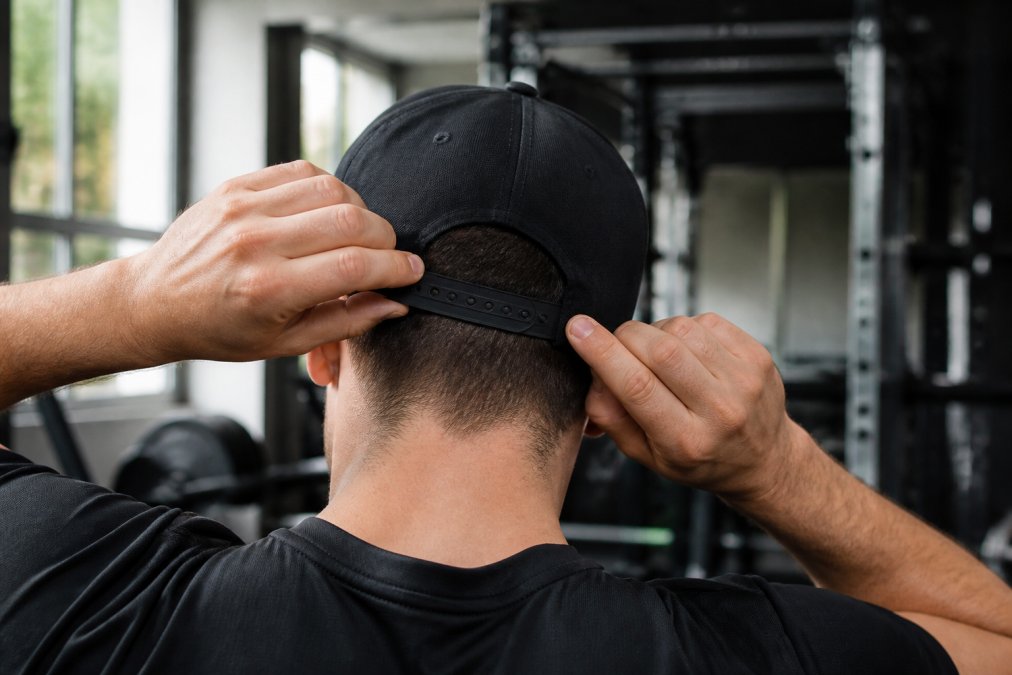
Fit decides comfort more than any other factor. A structured, high-profile cap holds its shape and suits rounder or larger heads, while an unstructured cap molds to the head and packs flat. For closure, a plastic snapback or strapback gives a wider adjustment range than a fixed size, useful if you're between sizes or wear your hair differently week to week.
Durability and Stitching Quality
Durable stitching keeps a cap from falling apart after months of use. Check the seams at the crown and where the visor meets the front panel, since those take the most stress. Reinforced embroidery and a solid closure separate a cap that lasts a season from one that lasts years.
Why Moisture-Wicking Gym Hats Matter for Heavy Training
Moisture-wicking gym hats matter because a soaked cotton cap stops breathing, traps heat, and drips sweat into your eyes mid-set. But "moisture-wicking" is a marketing phrase until you understand what's happening in the fabric, and which construction choices make it work.
The Mechanism: Capillary Action, Not Magic
Sweat-wicking fabric works through capillary action. Synthetic fibers like polyester, nylon, and elastane are hydrophobic, they don't absorb water the way cotton does. Instead, the fiber cross-section and knit structure create tiny channels that pull liquid sweat along the yarn and spread it across a wider area. More surface area means faster evaporation, and evaporation is what cools you.
Cotton behaves the opposite way. Its cellulose fibers are hydrophilic, absorbing and holding water inside the fiber itself. A cotton cap can hold a meaningful amount of sweat before it even feels wet, and once saturated it stops breathing, gets heavy, and stays damp long after your session ends. That's why a 100% cotton cap is a poor choice for high-intensity training.
What to Look For in the Spec Sheet
- Quick-dry finish: A quick-dry treatment or a knit structure designed for fast evaporation means the cap is ready to wear again sooner, useful if you train twice a day or rotate a small number of caps.
The Trade-Offs Nobody Mentions
For high-intensity training, this is the single biggest upgrade over a standard cotton cap. It also keeps the cap lighter, since it isn't holding a pound of water by the end of your workout, and lighter headwear means less distraction on a final set.
How to Clean Workout Hats Without Ruining the Shape
Cleaning workout hats correctly means hand-washing in cool water with a mild detergent, then air-drying, never machine-drying. Heat and agitation wreck a structured crown and shrink fabric, and the wrong method can ruin a cap in a single wash.
Why Heat and Agitation Are the Enemy
Synthetic fabrics add a second problem. Polyester, nylon, and acrylic blends can shrink or pill under high heat, and wool blends, like an 80% acrylic, 20% wool snapback, can felt or distort in hot water and agitation. Cool water and no tumbling are non-negotiable.
A Fabric-Specific Wash Routine
- Reshape and air-dry: Stuff the crown with a clean towel or a cap form to hold the profile, then air-dry at room temperature, away from direct sun and heat sources. A structured cap can take 12-24 hours to dry fully.
Handling Odor and Antimicrobial Treatments
Wash after every few heavy sessions. Letting sweat sit breaks down fabric and feeds odor, and once bacteria colonize the sweatband, a surface wash won't fully remove it.
Hair, Odor, and Heat: What Most Cap Guides Skip
Most guides treat a cap as a style item and ignore what it does to your scalp. Three things matter: odor control, hair-type fit, and how a cap affects your body's ability to cool itself.
Antimicrobial Treatments and Odor Control
Antimicrobial treatments slow odor-causing bacteria and are worth seeking out if you train daily. The catch: they fade with washing, and a treated cap still needs cleaning. The real fix is a sweat-wicking sweatband that dries fast plus a wash routine you actually follow.
How Caps Affect Thermoregulation
Hair type changes the equation too. Thick or long hair needs a deeper crown and wider closure range so the cap sits without pressure; short hair or a shaved head benefits from a sweatband to stop sweat running down. Neither is one-size-fits-all, which is why adjustable closures matter.
Conclusion
Finding the best workout caps for training is about matching fabric, fit, and airflow to how you actually train. Get those right and your cap stops being a nuisance and starts being gear.
At JACKED N TAN, we build caps for exactly that: a structured Trucker Cap with breathable mesh panels and an adjustable snapback for hot, heavy sessions, and a high-profile Snapback Hat with wool-blend fabric and locked-in closure for lifters who want one cap for the gym and the street. Both hold their shape and carry a mindset of discipline and progress.

SHOP THE DROP and wear your strength.
Frequently Asked Questions
Are gym hats good for working out?
Yes, when they're built for it. A workout cap with moisture-wicking fabric, a sweat-wicking sweatband, and ventilation eyelets keeps sweat out of your eyes and helps regulate heat during training. Structured caps hold their shape through repeated sessions, while lightweight unstructured options suit lower-intensity work. Avoid cotton-only caps that soak through and stay wet.
What features should I look for in a training hat?
Prioritize moisture-wicking or quick-dry fabric, a sweat-wicking sweatband, and ventilation eyelets for breathability. Check the closure: snapback and strapback options let you adjust for head circumference and stretch-fit comfort. Look for durable stitching and a structured or mid-profile crown if you want shape retention.
How do you wash a workout hat without ruining it?
Hand wash in cool water with a mild detergent, focusing on the sweatband and inner band where salt and oils build up. Gently scrub with a soft brush, rinse thoroughly, and air dry over a bowl or cap form to hold the crown shape.
Do moisture-wicking gym hats actually make a difference?
They do. Synthetic blends pull sweat away from your scalp and dry faster than cotton, which stays damp and heavy. Combined with a sweat-wicking sweatband and mesh ventilation, moisture-wicking gym hats reduce dripping, keep your grip and vision clear, and stay comfortable through high-intensity training sessions.